Why Sales Teams Are Replacing Headcount With AI Capacity
Businesses switching from headcount-based sales to AI capacity are reporting faster lead response, higher pipeline volume and lower cost per acquisition.

The businesses winning right now are not hiring more salespeople to solve a pipeline problem. They are deploying AI agents that work every hour of every day, qualify every lead and never drop the ball on a follow-up.The Agency
Businesses that have moved from hiring salespeople to deploying AI capacity are generating more qualified leads, responding faster to inbound interest and closing more revenue without the overhead that comes with growing a human team. The shift is not theoretical. In August 2026, it is the defining strategic move separating businesses that are growing their pipeline from those watching their cost per acquisition climb while results plateau.
The Problem With Headcount-Based Sales Growth
For decades, the default answer to a pipeline problem was straightforward: hire more salespeople. Need more calls made? Hire another SDR. Need more demos booked? Expand the team. Need better follow-up? Add a coordinator. The logic seemed sound because more human effort should, in theory, produce more output.
The reality has always been messier. Human sales teams bring enormous variability. One rep follows up diligently, another lets leads go cold after one email. One person books meetings at a high rate, another struggles and requires months of coaching. Onboarding takes time, training takes longer and attrition erases the investment entirely. Even a well-functioning team is constrained by working hours, energy levels, personal circumstances and the simple fact that people cannot work around the clock.
For businesses trying to grow revenue predictably, these variables create a ceiling. You can hire your way to a certain level of output, but at some point the cost of each additional salesperson outpaces the revenue they generate. The maths stops working. And in a competitive environment where leads expect responses within minutes, not days, a team that clocks off at six in the evening is structurally disadvantaged before anyone picks up the phone.
This is the ceiling that AI capacity breaks through entirely.
What AI Capacity Actually Means for a Sales Function
AI capacity is not a chatbot sitting on a website waiting to answer basic questions. It is a connected system of AI agents that handles the full breadth of top-of-funnel and mid-funnel sales activity, operating continuously, improving over time and integrating directly with the tools a business already uses.
In practical terms, this means an AI agent that picks up every inbound lead the moment it arrives, qualifies it against a defined ideal customer profile, personalises an opening response based on the lead source and context, initiates a follow-up sequence calibrated to that prospect's behaviour and books meetings directly into a salesperson's calendar without any human involvement in the process.
It means outbound prospecting sequences that identify, research and contact target accounts with messaging that reflects their specific industry, role and likely pain points. It means lead scoring that updates in real time based on engagement signals, so a human closer always knows which opportunities deserve immediate attention. It means CRM records that are accurate, complete and timestamped without anyone having to manually log activity after a call.
The shift from headcount to AI capacity is a shift from paying for human hours to deploying systems that produce output continuously. The economics are fundamentally different and the compounding benefit grows the longer the system operates.
Why August 2026 Is the Inflection Point
The capability of AI agents has improved to a degree that makes this transition practical for businesses of almost any size. The question is no longer whether AI can handle sales tasks. The question is whether a business has structured its processes and data well enough to deploy AI effectively.
In August 2026, the businesses pulling ahead are those that made the decision to invest in AI infrastructure early enough to have tuned, tested and optimised their systems. They are not experimenting. They are operating AI-led sales functions that run alongside, or in some cases instead of, traditional sales teams, generating pipeline at a volume that a headcount model could not match without prohibitive cost.
The competitive pressure this creates is significant. When one business in a market is following up with every lead within two minutes at any hour of the day and another is relying on a team that responds during business hours when capacity allows, the gap in conversion rate is not small. Speed to lead is one of the most consistent predictors of whether a prospect becomes a customer, and AI capacity wins on speed every single time.
Businesses that have not yet made this transition are not simply missing an efficiency gain. They are operating at a structural disadvantage that compounds every week they wait.
The Human Role in an AI-Capacity Sales Model
One of the most common concerns we hear from business owners and sales leaders is that moving to AI capacity means eliminating the human element from their sales process. This misunderstands the model entirely.
AI capacity does not replace human judgement, relationship-building or the kind of complex, nuanced conversation that closes a significant deal. What it replaces is the volume of repetitive, time-consuming tasks that currently absorb the majority of a sales team's working hours and prevent them from doing the work that actually requires a human.
When AI agents handle qualification, outreach, follow-up, scheduling and data entry, the human members of a sales team are freed to do exactly what they are best at. They spend their time on calls with well-qualified, pre-educated prospects who already understand the offer, have had their initial questions addressed and are genuinely ready to have a serious conversation about becoming a customer.
The result is a sales function where human effort is concentrated at the highest-value moments in the process and AI capacity handles everything else. This tends to produce better outcomes for the humans involved as well. Salespeople who are not grinding through cold lists and chasing dead leads are more motivated, more effective and more likely to stay.
Building an AI Sales System That Actually Produces Revenue
Deploying AI capacity that produces real revenue outcomes requires more than purchasing a tool and pointing it at a list of contacts. The businesses seeing the strongest results have approached this as a system design challenge, not a software procurement exercise.
The foundation is clarity about the ideal customer profile. An AI agent is only as effective as the targeting and qualification criteria it operates on. If those criteria are vague or poorly defined, the system will generate activity that does not convert. If they are precise and grounded in the patterns of actual customers who have gone on to generate strong lifetime value, the system produces pipeline that closes.
Messaging matters enormously. AI agents can personalise at a level that was previously impossible to deliver at volume, but the underlying message still needs to be relevant, credible and compelling. We work with businesses to develop the frameworks that allow AI to produce personalised outreach that sounds like it came from a thoughtful human who understood the prospect's situation, not a template with a name field swapped in.
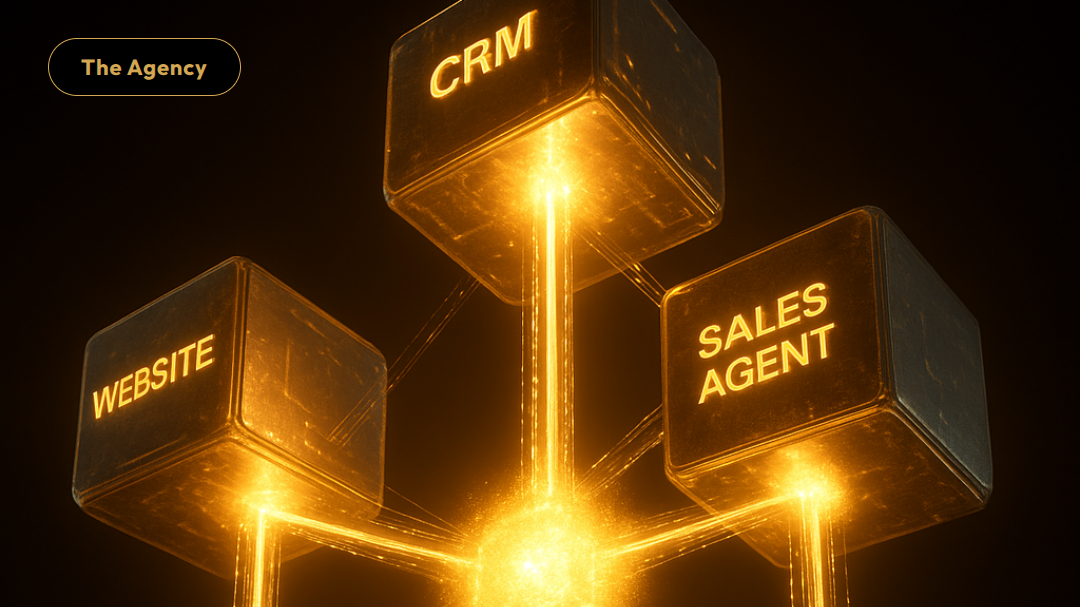
Integration with existing systems determines whether the AI operates as part of the business or alongside it. For AI capacity to deliver its full potential, it needs to connect with CRM, calendar, email, and wherever leads are being generated, whether that is paid advertising, organic search, referrals or a combination of all three.
Businesses that want to understand what this looks like for their specific situation and market can explore a custom AI sales strategy built around their offer, their audience and their current pipeline challenges.
The Revenue Case for Making the Move Now
The financial argument for moving from headcount to AI capacity is not complicated, but it is worth stating clearly. The cost of deploying and maintaining an AI sales system is substantially lower than the cost of hiring, onboarding, managing and retaining human salespeople to do equivalent work. That gap in cost does not produce equivalent output. AI capacity produces greater output, operating continuously and improving over time.
The revenue upside comes from multiple directions simultaneously. More leads are contacted. More leads are contacted faster. Follow-up is consistent and persistent in a way that human teams rarely achieve. Pipeline visibility improves because data is accurate and complete. Human closers work more efficiently because they are spending time on qualified conversations rather than prospecting and administration.
Businesses in our network that have made this transition are not describing modest improvements. They are describing fundamentally different pipeline dynamics, where the constraint on growth is no longer the capacity of their sales function but the size of the market they are addressing and the quality of their offer.
In August 2026, that is the conversation worth having. Not how many salespeople to hire next quarter. How to build the AI capacity that makes headcount growth optional rather than necessary.
What to Do Next
The starting point for any business considering this transition is an honest assessment of where human time is currently going in the sales function. In almost every case, the majority of that time is on tasks that AI agents can handle more consistently, more quickly and at lower cost.
From that assessment, it becomes possible to design a deployment that preserves human involvement where it genuinely adds value and replaces it where it does not. The result is a sales function that is more productive, more predictable and more capable of generating the pipeline needed to grow revenue without the headcount cost that has historically been the only way to achieve it.
The businesses that act on this now will not simply gain an efficiency advantage. They will build a compounding capability that becomes harder for competitors to close the gap on with every month that passes.
Frequently asked questions
What does it mean to move from headcount to AI capacity in sales?
It means replacing or supplementing human sales roles with AI agents that handle lead qualification, outreach, follow-up and pipeline management. Rather than hiring additional staff to grow output, businesses deploy AI systems that operate continuously without fatigue or downtime. The result is more pipeline activity at a fraction of the cost of expanding a human team.
Can AI agents actually replace a sales development representative?
For many top-of-funnel tasks, yes. AI agents can handle inbound lead qualification, initial outreach sequences, meeting booking and CRM data entry far more consistently than a human SDR working standard hours. Where human judgement remains valuable is in complex negotiations and relationship-heavy enterprise deals, though even those are supported by AI-generated insights and preparation.
Will moving to AI sales capacity reduce the quality of customer interactions?
Not when the system is built correctly. AI agents trained on your brand voice, your offer and your ideal customer profile can deliver highly personalised, relevant conversations at speed. Many businesses find that response times improve dramatically, which itself increases lead quality because prospects receive attention while their interest is highest.
How quickly can a business see results from AI-led lead generation?
Most businesses begin seeing measurable pipeline activity within the first few weeks of deployment, particularly on inbound lead handling and outreach sequences. The compounding benefit builds over time as the system learns which messages, timings and channels produce the strongest conversion rates for that specific audience.
Is this approach only suitable for large businesses with big budgets?
No. AI capacity is increasingly accessible to small and mid-sized businesses and is often more impactful for them because it allows a lean team to compete with larger, better-resourced competitors. A small business with well-deployed AI agents can out-respond, out-follow-up and out-qualify a larger business running a traditional headcount model.
What sales tasks are best suited to AI agents right now?
Lead qualification, personalised outreach sequences, follow-up cadences, meeting scheduling, CRM updates, objection handling scripts and lead scoring are all tasks AI agents handle extremely well today. These represent the bulk of what a traditional SDR or inside sales rep spends their time on, freeing any remaining human team members to focus on closing and relationship work.