How AI Agents Are Making Proposals and Quotes Faster Than Ever
AI agents are transforming how businesses create proposals and quotes, cutting delays and helping sales teams close more leads with far less manual effort.
The businesses winning the most leads right now are not the ones with the biggest teams, they are the ones responding first with proposals that feel personal and precise. AI agents make that possible at a level of speed that humans simply cannot match alone.The Agency
Get your AI growth plan, mapped to your business
Get my free AI plan 30 seconds. 100% free. No card.Businesses that use AI agents to build and send proposals are reporting shorter sales cycles, stronger conversion rates, and sales teams that finally have enough breathing room to focus on relationships rather than admin. The bottleneck that used to sit between a promising lead and a signed agreement, the hours spent assembling quotes, gathering information, formatting documents, and chasing approvals, is being removed. AI agents handle the heavy lifting so that your business shows up faster, looks sharper, and wins more often.
The Hidden Cost of a Slow Proposal Process
Every day a proposal sits unfinished in a salesperson's to-do list is a day your competitor has to reach that same prospect. In competitive markets, being second is rarely good enough. Leads that were warm when they enquired can cool quickly, and the business that responds first with a clear, relevant offer almost always has the advantage.
The manual process of building a quote from scratch is deceptively expensive. A salesperson needs to gather information about the prospect, cross-reference it with the company's pricing and service structure, write something that feels tailored rather than templated, get it reviewed, format it correctly, and send it out. Multiply that across ten, twenty, or fifty enquiries a week and you begin to see where the hours go. This is not a people problem. It is a process problem, and it is one that AI agents are exceptionally well-suited to solve.
For businesses relying on proposals as a core part of their sales pipeline, the time lost to manual quoting directly translates to revenue lost. Leads that do not receive timely responses often go quiet, not because they found a better price, but because they found a faster answer somewhere else. Fixing the speed of your proposal process is not a back-office improvement. It is a front-line revenue decision.
What AI Agents Actually Do in the Quoting Process
An AI agent in a sales context is not simply a chatbot or an autocomplete tool. It is a configured system that understands your business, your services, your pricing logic, and your client segments, then uses that knowledge to take action on your behalf. When applied to proposals and quoting, the agent becomes a capable collaborator that handles the assembly work so your team handles the judgement work.
In practical terms, an AI agent built for proposal generation might pull information directly from your CRM when a new lead comes in. It reads the enquiry, identifies the relevant service category, matches it against your pricing tiers, and generates a structured proposal draft. That draft lands in the salesperson's inbox or workspace ready to review and send, often within minutes of the original enquiry arriving.
Beyond the initial draft, agents can be configured to follow up with leads who have not responded to a proposal, flag proposals that have been open for longer than a defined window, and even adjust language or emphasis based on industry or company size. The agent does not replace the salesperson. It removes the tasks that were slowing the salesperson down and making their work feel more like administration than selling.
For businesses that handle complex, multi-line quotes with variable pricing, AI agents can be trained on the logic behind those calculations, so that the output is not just fast but accurate and consistent. Human error in a quote is embarrassing at best and damaging to trust at worst. An agent that applies your pricing rules reliably every time removes that risk.
The Lead Generation Connection
Faster proposals do not exist in isolation. They sit within a broader lead generation and sales ecosystem, and when the quoting stage moves quickly, the entire funnel becomes more effective. Think of it this way: your lead generation activity, whether that is paid advertising, content marketing, outreach, or referrals, is designed to bring the right people to your door. Once they arrive, everything that follows either earns or wastes that effort.
If your AI-assisted lead generation is bringing in a strong volume of qualified enquiries but your proposal process is a bottleneck, you are essentially leaving money on the table that your marketing already paid for. Fixing the proposal stage means your lead generation investment works harder, because a greater proportion of the leads you bring in actually convert into revenue.
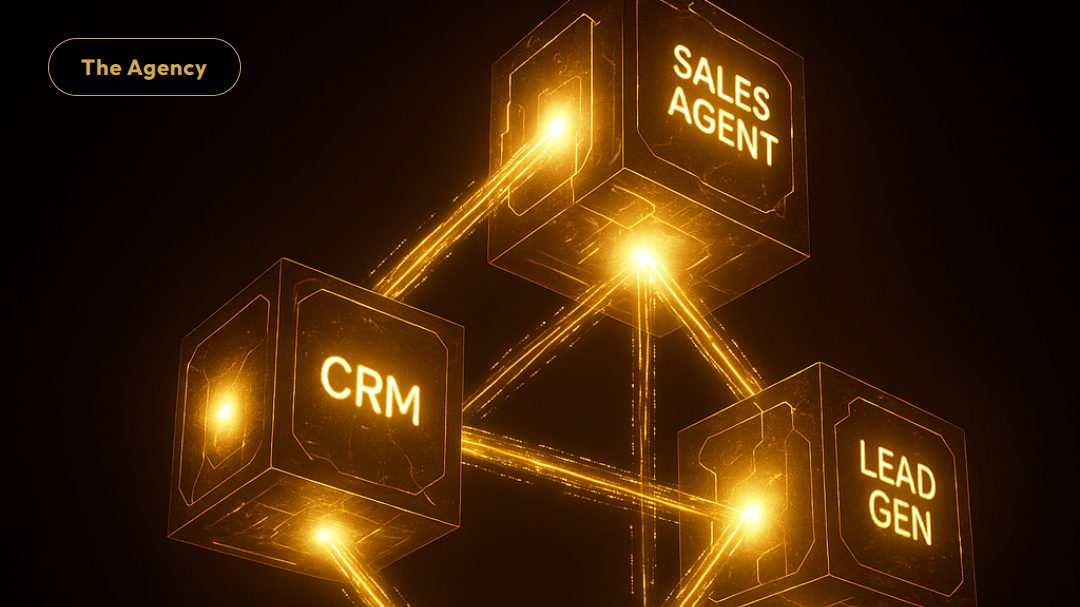
This is where AI agents create a compounding effect. When they are embedded not just at the quoting stage but across the full lead journey, from capturing and qualifying enquiries through to follow-up and nurturing, every part of the process becomes more responsive. A prospect who enquires through your website, receives a personalised acknowledgement within seconds, and has a tailored proposal in their inbox within the hour is experiencing a buying process that feels effortless. That experience builds confidence and confidence closes deals.
If you are looking to understand how AI agents could fit into your specific lead generation and sales workflow, exploring a custom AI marketing strategy is a practical starting point.
Personalisation at Speed: Why It Matters More Than Ever
One of the most persistent tensions in sales has always been the trade-off between speed and personalisation. You can send something fast or you can send something that feels considered, but doing both at once has traditionally required either a very small number of leads or a very large team. AI agents resolve that tension.
Prospects have become increasingly sophisticated in spotting generic proposals. When a quote lands in their inbox and it could clearly have been sent to anyone, it signals that the sending business has not really listened to their needs. That first impression can be difficult to recover from, regardless of how competitive the pricing is. Personalisation is not a luxury in modern sales. It is a baseline expectation.
AI agents can be configured to draw on everything known about a prospect when building a proposal. The industry they operate in, the size of their business, the specific challenge they described in their enquiry, the language they used, and the services they asked about can all shape the output. The proposal that arrives feels like it was written for them, even though much of the assembly was handled automatically.
This is not about deceiving prospects into thinking they received more attention than they did. It is about ensuring that the intelligence your team would apply if they had unlimited time is applied consistently, even when they are handling a high volume of leads. AI agents bring thoroughness and relevance to every proposal, not just the high-value ones.
Building the Right AI Agent Setup for Your Business
Implementing AI agents for proposals and quotes is not a one-size-fits-all process. The right configuration depends on the complexity of your services, the volume of your enquiries, the tools your team already uses, and the specific points in your sales process where delays are costing you the most.
For some businesses, the priority is speed at the very first response, getting something meaningful in front of a prospect within minutes of their enquiry. For others, the bigger challenge is the mid-process bottleneck where proposals get built but sit waiting for internal sign-off. For others still, the issue is follow-up, where warm leads go cold because no one had time to chase. AI agents can be built to address any or all of these points.
The setup process typically involves mapping your current proposal workflow, identifying where time is being lost, defining the logic and criteria your agent needs to follow, and integrating the agent with the systems your team already works in. Done well, the agent becomes invisible in the best possible sense. Your team simply finds that things are happening faster, with less effort, and to a higher standard of consistency.
It is worth investing in this setup properly. Agents built on unclear instructions or poorly mapped processes will produce outputs that still require significant human correction, which defeats the purpose. Working with specialists who understand both the technology and the sales process ensures the agent is built to actually help rather than add a new layer of work.
What Faster Proposals Mean for Your Revenue
The business case for AI-assisted proposals is straightforward when you follow the logic from end to end. Faster proposals mean more leads receive a timely response. More timely responses mean higher conversion rates. Higher conversion rates mean more revenue from the same volume of leads, without increasing your advertising spend or growing your team.
Beyond the direct revenue impact, there is a secondary benefit that is equally important: your sales team's morale and focus. When talented salespeople spend the majority of their time on administrative assembly work, they are underutilised and often frustrated. When AI agents handle the assembly, those same people can spend their time on conversations, relationships, and the kind of nuanced judgement that genuinely requires a human. That shift is good for retention, good for performance, and good for the culture of your sales function.
Businesses that are growing their revenue sustainably in competitive markets are increasingly the ones that have recognised AI agents as a core part of their sales infrastructure, not a future consideration but a present advantage. The proposal process is one of the most accessible and highest-impact places to start, because the problem is visible, the solution is achievable, and the results show up quickly in your pipeline.
Get your AI growth plan, mapped to your business
Get my free AI plan 30 seconds. 100% free. No card.Frequently asked questions
How do AI agents help businesses send proposals faster?
AI agents can pull together relevant information from your CRM, your service catalogue, and a prospect's enquiry in seconds, then generate a structured, personalised proposal draft ready for review. This removes the manual assembly work that typically adds hours or even days to the process. Sales teams can then focus on refining and sending rather than building from scratch.
Can AI agents personalise quotes for each lead automatically?
Yes. AI agents can be trained on your pricing logic, your service tiers, and your client segmentation criteria so that every quote reflects the specific context of each enquiry. Rather than sending a generic template, the agent draws on lead data to tailor the language, scope, and pricing presentation. The result feels considered, not automated.
Will faster proposals actually help us win more business?
Speed is one of the most underrated factors in closing sales. Prospects who receive a clear, relevant proposal quickly are far more likely to feel confident in your professionalism and less likely to shop around. AI agents reduce the window between a lead expressing interest and your business presenting a compelling offer, which directly supports conversion.
What kinds of businesses benefit most from AI-assisted quoting?
Any business that handles a high volume of inbound enquiries, offers multiple service tiers, or has a sales team stretched across multiple tasks will see meaningful gains. This includes agencies, consultancies, trades businesses, SaaS companies, and professional services firms. Essentially, if your team spends significant time building quotes manually, AI agents can recover that time and put it back into relationship-building.
Do we need technical expertise to set up AI agents for proposals?
Not necessarily. Many AI agent platforms are designed to integrate with the tools your team already uses, such as your CRM, email client, and document systems, without requiring deep technical knowledge. Working with a specialist who builds custom AI agent workflows means the setup is handled for you, and your team simply benefits from the output.
How does AI fit into our wider lead generation and sales process?
AI agents work best when they are embedded across the full lead journey, from initial enquiry capture through to proposal delivery and follow-up. When the quoting stage is fast and accurate, it amplifies the value of everything that came before it, whether that is paid advertising, organic content, or outbound outreach. A slow proposal process can undo the work of an otherwise excellent lead generation strategy.