AI Agents Are Quietly Replacing Parts of the Sales Team: What Business Owners Need to Know
AI agents are handling lead generation, qualification and outreach, delivering real revenue results without growing your headcount.

The businesses pulling ahead right now are not hiring more salespeople, they are deploying AI agents that work every hour of every day, qualifying leads and booking meetings before a human ever gets involved.The Agency
Get your business scored out of 10 and your three fastest moves
Get my free Company Report 30 seconds, free. Mapped to your numbers.AI agents are no longer a future concept sitting on the horizon of business planning. Right now, in July 2026, they are actively taking over the most time-consuming parts of the sales process, qualifying leads, booking meetings, sending follow-ups and nurturing prospects, all without adding a single person to the payroll. Businesses that have deployed AI agents in their commercial operations are reporting fuller pipelines, shorter response times and sales teams that spend far more of their day on actual selling. The shift is quiet, but it is significant, and it is accelerating.
The Parts of Sales That AI Agents Are Taking Over First
If you map out a typical sales process, a large portion of the time and effort involved is not really selling at all. It is administration, repetition and follow-up. It is sending the same initial email in slightly different forms to a long list of prospects. It is chasing a lead that went quiet three weeks ago. It is updating the CRM after every call. It is scoring inbound enquiries to decide which ones are worth a phone call.
These are precisely the tasks that AI agents handle with ease, and they handle them at a pace and consistency that no human team can match. An AI agent does not forget to follow up. It does not have an off day where the email copy feels flat. It does not take a two-week holiday in August while a warm lead goes cold.
The earliest adopters in this space deployed AI agents to manage their inbound lead response first. When a prospect fills in a form or sends an enquiry, the AI agent responds within seconds, asks qualifying questions, assesses fit and either books a meeting directly into a salesperson's calendar or places the lead into the appropriate nurture sequence. What once took hours now takes moments, and the improvement in conversion from enquiry to booked call has been striking for businesses that have made the switch.
Lead Qualification: Where AI Agents Deliver the Most Immediate Value
Lead qualification has historically been one of the most expensive parts of running a sales operation. You need trained people to speak with prospects, ask the right questions, assess budget, authority, need and timing, and then decide whether to invest further resource. It is skilled work, but it is also largely formulaic, which makes it an ideal candidate for automation.
AI agents can be trained on a business's ideal customer profile and given a set of qualification criteria that they apply consistently across every single interaction. They ask the right questions in a conversational, natural way. They gather the information that matters. They update the CRM automatically. And they route leads to the right place based on what they find.
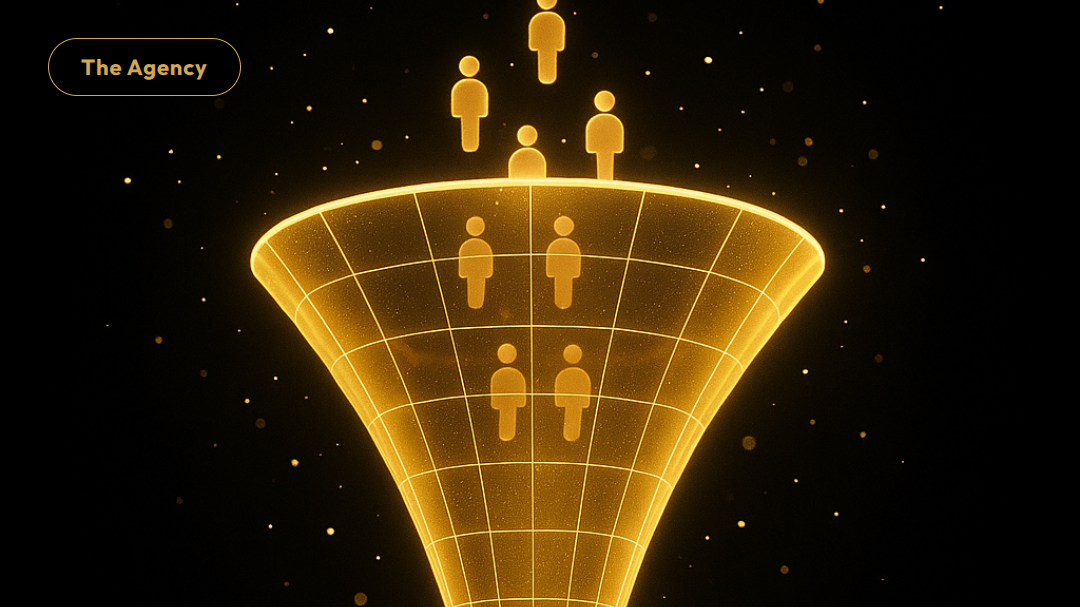
For sales teams, this is transformative. Rather than spending the first part of every day working through a list of unqualified enquiries, salespeople arrive to find a pipeline of conversations that have already been screened. The leads they speak to are more likely to be genuine prospects. The conversations start further down the funnel. Close rates improve, not because the salespeople have suddenly become better, but because they are spending their time in the right places.
This is particularly powerful for businesses that generate high volumes of inbound enquiries through content, advertising or partnerships. The AI agent becomes the first filter, ensuring that human attention is reserved for the leads that truly warrant it.
Outbound Prospecting at a Pace No Team Can Match
Inbound lead handling is one side of the story. Outbound prospecting is the other, and it is here that AI agents are perhaps the most quietly disruptive force in modern commercial operations.
Traditional outbound sales requires a team of people to identify prospects, research them, craft personalised outreach, send it at the right time, track responses and manage the follow-up sequence. Done properly, it is labour-intensive and expensive. Done poorly, it is spam that damages the brand and wastes everyone's time.
AI agents, when built correctly, do outbound prospecting properly and at a volume that a human team simply cannot match. They research prospects using publicly available information. They personalise messages based on what they find. They send at optimal times. They manage multi-step sequences that adapt based on whether the prospect has opened, clicked or replied. They log everything.
For businesses trying to grow their revenue without growing headcount proportionally, this is a fundamental change in what is possible. A commercial team of three or four people, augmented by well-deployed AI agents, can run outbound campaigns at a grow that would previously have required a department.
If you want to understand how AI agents could be applied specifically to your business's lead generation and sales process, exploring a custom AI lead generation strategy is the most direct way to move from theory to practical results.
The Human Salesperson Is Not Disappearing, They Are Changing
It is worth being precise about what is actually happening here, because the framing of AI replacing salespeople often generates more alarm than is warranted. The more accurate picture is that AI agents are replacing specific functions within the sales role, particularly the administrative, repetitive and early-stage qualification work, and in doing so they are reshaping what it means to be a salesperson.
The salespeople who are thriving in businesses that have deployed AI agents are those who have leaned into the change. They spend less time prospecting and more time building relationships. They spend less time on data entry and more time on complex negotiations. They spend less time chasing cold leads and more time closing warm ones.
For businesses, this creates an opportunity to reconsider what they actually need from their commercial team. In some cases, companies that were planning to hire additional salespeople have found that deploying AI agents achieves the revenue growth they were looking for without the hiring cost. In other cases, the same number of salespeople are generating significantly more revenue because the quality and volume of their pipeline has improved.
What businesses should resist is the temptation to simply layer AI agents on top of an unchanged sales process and expect the results to speak for themselves. The real gains come when the process is rethought with AI agents in mind from the start.
What Holds Businesses Back From Making the Transition
Despite the clear opportunity, many businesses are still slow to deploy AI agents in their sales operations, and the reasons tend to cluster around a few familiar concerns.
The first is a worry about quality. Business owners and sales directors are concerned that AI-generated outreach will feel generic, that prospects will notice and that the brand will suffer. This concern is legitimate when applied to poorly built AI systems, but it is not an inherent limitation of the technology. AI agents built with careful attention to voice, personalisation and context can produce outreach that is indistinguishable from thoughtfully written human communication.
The second concern is about complexity. Many businesses assume that deploying AI agents requires significant technical resource, lengthy implementation timelines and ongoing specialist maintenance. In practice, the most effective AI agent deployments are built on clear strategy first and technology second. The businesses that succeed are those that define their ideal customer, their qualification criteria and their desired outcomes before they think about which tools to use.
The third concern is about control. Sales leaders worry about losing visibility into what their AI agents are doing and saying, and about what happens when something goes wrong. These are valid concerns that need to be addressed in the design of any AI agent system, but they are solvable problems, not reasons to avoid the technology altogether.
Revenue Results and the Businesses Seeing Them
The most compelling argument for AI agents in sales is not theoretical. It is the evidence accumulating from businesses that have already made the transition.
Across sectors, from professional services to SaaS to e-commerce, businesses are reporting that AI-augmented sales operations produce more pipeline from the same or smaller teams. Lead response times that were measured in hours are now measured in seconds. Follow-up sequences that previously required manual management are now running continuously without human intervention. Salespeople who were spending a significant portion of their week on prospecting and administration are now spending the majority of their time in high-value conversations.
The revenue impact follows naturally from these operational improvements. More leads are being qualified faster. More prospects are being kept warm through consistent nurture. More meetings are being booked. More deals are being closed.
For businesses that are serious about growing their revenue in the remainder of 2026 and beyond, the question is no longer whether AI agents have a role in sales. They clearly do. The question is how quickly the business can design and deploy them effectively, and how much pipeline opportunity is being left on the table in the meantime. The businesses pulling ahead are not waiting to find out.
Get your business scored out of 10 and your three fastest moves
Get my free Company Report 30 seconds, free. Mapped to your numbers.Frequently asked questions
Can AI agents really replace a sales team?
AI agents are not replacing entire sales teams outright, but they are taking over specific, repeatable functions such as lead qualification, follow-up sequences and appointment booking. Human salespeople are then freed to focus on higher-value conversations and closing. The result is a leaner, more productive team that generates more revenue per person.
What parts of sales can AI agents handle?
AI agents can handle inbound lead response, outbound prospecting, personalised email and message sequences, lead scoring, CRM updates and meeting scheduling. They can also manage nurture sequences for leads that are not yet ready to buy, keeping prospects warm without any manual effort from your team.
How do AI agents generate leads for businesses?
AI agents generate leads by automating outreach across email, LinkedIn and other channels, personalising messages at a level that would be impossible to maintain manually. They can also respond to inbound enquiries in seconds, which dramatically improves conversion rates compared to slower, manual responses.
Is AI lead generation suitable for small businesses?
Yes, AI lead generation is particularly well suited to small businesses because it allows a small team to compete with much larger organisations. A business with two or three people in a commercial function can now generate and manage a volume of leads that would previously have required a full sales department.
Will AI agents damage the customer relationship?
When implemented correctly, AI agents actually improve the early stages of the customer relationship because they respond faster, remember every detail and never drop the ball on a follow-up. The key is designing the handoff point clearly so that human salespeople take over at the right moment in the conversation.
How quickly can a business see results from AI sales agents?
Many businesses begin to see meaningful improvements in lead response times and pipeline volume within the first few weeks of deployment. Longer-term gains in revenue and conversion rates typically become clear over the following one to three months as the system learns and the sequences are refined.