AI Agents Close Deals While Sales Reps Sleep
AI agents qualify, pitch, and close deals via WhatsApp in real time whilst sales reps handle administration. Companies deploying AI agents are compressing their sales cycles dramatically, freeing senior reps to focus on high-value relationships.

The sales teams winning in 2026 aren't replacing people with AI. They're freeing people from admin and letting AI do the repetitive work that burns them out. Speed is the competitive advantage.The Agency
Find the gaps leaking the most revenue
Show me my revenue leak Your annual leak in pounds, in 30 seconds. Free.Why AI agents are faster than human sales reps
AI agents do not sleep, do not get distracted, and do not procrastinate on follow-ups. When a prospect replies to an email at 11 PM on a Friday, a human sales rep will not see it until Monday morning. An AI agent qualifies the prospect, answers their questions, and moves them to a demo call before they go to bed.
This is not hyperbole. This is the structural advantage of automation: a machine that works on the prospect's schedule, not on business hours. And because qualification is the bottleneck in most sales processes, removing that bottleneck has a cascade effect throughout the entire deal cycle.
For most B2B companies, a typical sales cycle looks like this: lead arrives on Tuesday, sales rep responds Wednesday morning, first call Thursday, proposal sent Friday, prospect reviews over the weekend, contract signed the following Tuesday. That is seven business days. An AI agent can compress that to two to three business days by responding immediately, qualifying without scheduling overhead, and moving qualified prospects to humans for closing.
The velocity gain compounds. When you handle the same volume of inbound leads, but each deal closes weeks faster, the financial impact is enormous. Faster cycles mean fewer leads go cold during the sales process. Fewer deals stall during negotiation. More revenue closes per quarter. This is why companies with mature AI sales processes are outpacing traditional human-only sales teams.
How the human sales process creates bottlenecks
Most sales teams structure their time around administration, not selling. A senior sales rep with a £100k annual quota spends the majority of their day in email, qualification notes, and scheduling coordination. How much time do they actually spend on a sales call? Perhaps 4 hours per week. The rest is overhead.
When a prospect replies to a cold email with interest, the human sales rep must perform a dozen tasks in sequence:
- Read and understand the email
- Search their CRM to see if this prospect is already known
- Write a personalised reply
- Schedule a call (back-and-forth on availability)
- Send a Zoom link
- Prepare notes and talking points
- Take the call
- Write follow-up notes
- Send a proposal
- Wait for the prospect to review (another 3 to 5 days)
- Negotiate and close
Each step introduces a delay. Each delay gives the prospect a chance to deprioritise. Each deprioritisation turns a hot lead cold. A prospect who is excited at 2 PM on Tuesday becomes lukewarm by Wednesday morning, cool by Thursday, and cold by Friday. By the following week, they have lost interest entirely.
An AI agent, by contrast, can handle steps 1 through 6 automatically within minutes. The prospect gets an immediate, personalised reply that books a call into your calendar in real time. No back-and-forth. No waiting. The prospect is still engaged. The moment of interest is captured, not lost.
What AI agents can see that humans cannot
Human sales reps qualify based on experience and gut feel. AI agents qualify based on data.
An AI agent can access information in real time:
- Company tech stack: What software the prospect is already using, which indicates budget, maturity, integration complexity, and likelihood of switching
- Company growth trajectory: Hiring patterns, funding announcements, headcount trends, revenue signals from public data and news
- Decision-maker information: LinkedIn history, title changes, previous job roles, company tenure, seniority indicators
- Buying signals from messaging: Specific problems mentioned in the prospect's own words, budget hints, timeline urgency, competitive pressure
- Competitor data: Is this prospect already in conversation with competitors? Are they using a competitor tool? How long have they been a customer?
When a prospect says "We are looking at options", a human sales rep hears "they are interested". An AI agent looks at company growth, decision-maker authority, current tool usage, and competitor activity, and assigns a real probability: "This prospect has a 70% chance to close if we move fast, but they are already talking to our top competitor, so we have a 10-day window."
This is not guessing better. This is making decisions on data, not instinct. And data grows. One human rep's intuition is good; 100 human reps are inconsistent. One AI agent's data-driven qualification process is reliable; 100 AI agents running the same process are consistently reliable.
The deal flow that beats human sales teams
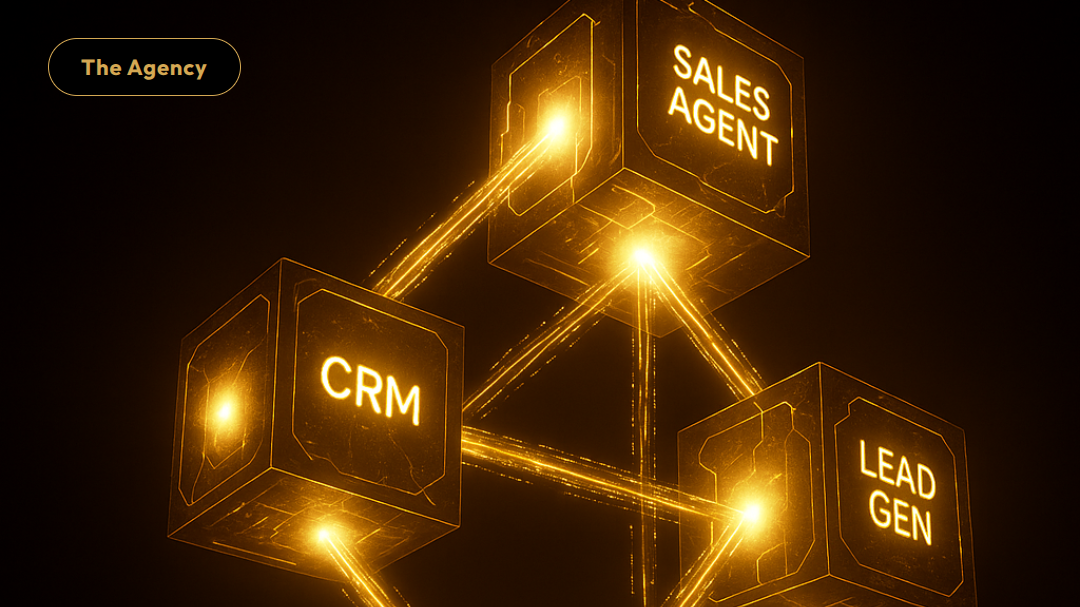
The AI agents winning in June 2026 follow a proven architecture:
- Lead generation: AI system identifies and enriches target companies and decision-makers based on company profile, growth signals, and industry fit
- Personalised outreach: AI agent sends cold messages via email or LinkedIn, tailored to the prospect's company, role, and most likely pain point
- Immediate response: Prospect replies within hours. AI agent responds within seconds.
- Qualification: AI agent asks targeted questions to uncover budget, authority, timeline, and urgency. It qualifies or disqualifies based on real data, not assumptions.
- Problem-specific pitch: Once qualified, AI agent pitches the exact problem the prospect revealed, using language and examples specific to their industry and company size
- Objection handling: Prospect raises concerns. AI agent addresses them by referencing peer companies in the same industry, case studies, and ROI data
- Demo booking: AI agent books a call into your calendar or closes the deal if the deal size is small (under £20k)
- Handoff to humans: For deals over £20k or deals requiring relationship, the AI agent briefs the human sales rep with full context, including all previous conversations, objections raised, and pricing signals
At each stage, the AI agent is faster. And because the prospect never sits in a waiting period, they remain engaged. The relationship that usually takes weeks to build is compressed into days.
For deals under £20k, this entire flow closes without human involvement. For deals over £20k, humans take over once the prospect is warm and qualified. This hybrid approach means your sales team spends all their time on closing, not on qualification. This is where they add the most value.
Why sales cycles compress with AI
The core metric that changes is time to first reply. A human sales rep replies in 18 to 24 hours. An AI agent replies in 30 seconds. That 18 to 24 hour gap is lost time in which the prospect deprioritises, talks to competitors, or loses momentum.
Compress that gap to 30 seconds, and the prospect stays engaged. That engagement compounds through the entire cycle: faster replies lead to faster qualification, faster qualification leads to faster demos, faster demos lead to faster closes.
Companies piloting AI outbound in Q1 and Q2 2026 are reporting that their close cycles compress. The exact compression depends on several factors: deal size (small deals close much faster), industry (tech deals close faster than manufacturing), and inbound versus outbound (warm inbound closes faster than cold outbound). But the direction is consistent across all segments: AI agents compress cycles.
The reason is mechanical. If a human-only process takes 100 days from lead to contract, and half of that time is waiting for the prospect to respond or internal delays, then removing those delays cuts the cycle to 50 days. AI does not remove the thinking time (the prospect still needs to evaluate), but it removes all the waiting time.
The hybrid model that actually works
The mistake most companies make is assuming "AI replaces sales reps". That is wrong. The winning model is: "AI handles the repetitive part so sales reps can handle the relationship part."
Here is how it breaks down in practice:
AI agents are best for:
- Cold outbound qualification (speed and volume)
- Objection handling on common objections (budget, timing, decision-maker availability, technical concerns)
- Follow-up sequences (the AI never gives up, never gets tired, never forgets a touchpoint)
- Booking demos and ensuring prospects show up (reminder sequences, time-zone conversions)
- Closing deals under £20k without human touch
- Building initial rapport and context for handoff to humans
Humans are best for:
- Building deep relationships and trust on large deals (£20k+)
- Negotiating complex pricing and contract terms
- Handling unique or highly technical objections
- Closing deals that require presence, credibility, and authority
- Managing customers post-sale and identifying expansion opportunities
- Handling prospects who explicitly request a human conversation
This structure means your sales team stays the same size (or shrinks) whilst revenue grows. Your best reps stop doing qualification work and start doing closing work. Your junior reps learn from AI how to qualify correctly, so their skills improve faster. Your team gets less burnt out because the admin is gone.
The typical result: a team of 5 reps plus AI handles the volume that previously required 15 reps. The same quality of relationship, but 3x the productivity.
What to do in June 2026
If your sales process is still 100% human and your close cycles are 14 days or longer, your competitors who have deployed AI are already ahead. Here is how to catch up.
Start here:
- Audit your current cycle: Track average response time, time to first demo, time to proposal, and time to close. This is your baseline.
- Identify your bottleneck: Most companies find that qualification takes 40% of the cycle and admin takes another 40%. That is where AI wins.
- Pilot AI on one niche or product tier: Start with warm leads or referrals (easier to sell). Measure reply rate, qualification rate, demo booking rate, and close rate. Run it in parallel with your human sales team for 30 days. Compare.
- Move from pilot to production: If the metrics are better (and they usually are), expand to all cold outbound. Keep humans on large deals and relationship management.
The entire process, from pilot to full deployment, takes 60 days. The time to breakeven on AI tooling is usually 90 days.
The sales teams winning in 2026 are not the ones with the best sales reps. They are the ones who let AI do the repetitive work and freed their best people to do the relationship work. They are the ones who realised that qualification is not a skill that differentiates; it is a bottleneck that wastes time.
For AI agent strategy and implementation tailored to your business, explore our custom strategy approach. We help companies design and deploy AI sales agents that integrate with their existing team and tooling, measure impact accurately, and grow without breaking your process.
Want to learn more about how AI agents are reshaping sales? Read more in our AI Agents news hub, where we cover the latest in AI-powered sales, lead generation, and business automation.
Get started with AI-powered sales
If your sales team is spending more time on qualification than closing, we can show you how AI agents compress your close time and free your team to focus on relationships. We have designed AI sales systems for companies across SaaS, recruitment, consulting, and services.
Find the gaps leaking the most revenue
Show me my revenue leak Your annual leak in pounds, in 30 seconds. Free.Frequently asked questions
How much faster do AI agents close deals than human sales reps?
AI agents reply to prospects within minutes at any time of day, whilst human reps typically respond the next business day. This creates a material compression in sales cycles. For a 7-day cycle, an AI-qualified deal might close in 2-3 days. The exact speed gain depends on your deal size and complexity.
Can AI agents handle objections as well as human sales reps?
AI agents excel at handling common objections (budget, timing, authority) because they reference company data in real time and never get fatigued or frustrated. For deals under £20k, most close without human involvement. Deals over £20k typically route to humans after AI qualification to build relationship and trust.
Do I need to replace my sales team with AI?
No. The winning model is hybrid: AI handles qualification and objection handling (speed and volume), whilst your best reps focus on closing large deals and building relationships. Your team stays flat whilst revenue grows because the AI removes the bottleneck of qualification.
What kind of deals close best with AI agents?
Mid-market SaaS, recruitment placements, coaching packages, and enterprise qualification all work well. Deals under £50k close reliably without human touch. Deals over £50k route to humans after AI builds context, because relationship and negotiation matter at that grow.
How do I start using AI agents for sales?
Start with one niche or product tier and pilot with warm leads. Measure: reply rate, qualification rate, demo booking rate, and close rate. Compare your AI performance to your sales team on the same leads. Most companies see faster cycles and more consistent follow-up within the first month.
What tools do AI agents need to qualify prospects?
Access to company data (via WHOIS and tech stack analysis), decision-maker information (via LinkedIn data and CRM history), buying signals from messaging (keyword detection), and integration with your CRM to log activity and book calls automatically.