AI Agents Are Running Marketing Teams
Marketing teams are no longer running campaigns. They're managing AI agents that run campaigns, nurture leads, and close sales 24/7 without human intervention. Here's what changed.

The smartest agencies in June 2026 are not hiring more humans. They are building AI agents, training them on the business, and watching one person manage the work of four. The revenue difference is not marginal.The Agency
Want to see what your business is leaving on the table?
I want a free AI audit Takes 30 seconds. 100% free. No call, no card.The shift has already happened
You don't hire a "Marketing Manager" anymore. You hire an AI agent.
By June 2026, the agencies and SaaS teams that are winning have stopped hiring humans for routine marketing work. Not because people are bad at their jobs. It is because AI agents are better suited to routine work by design. An AI agent doesn't sleep. It doesn't take holidays. It doesn't fatigue on the third follow-up email. It doesn't need a salary, a manager, or health insurance.
Where a human marketer working 9-to-5 touches tens of prospects per month, an AI agent touches hundreds. Where a human closes a handful of deals per month, an AI agent handles far more conversations in the same timespan because it never stops working.
The shift happened quietly. Nobody announced "we replaced marketing with AI." They built four AI agents, wired them to their CRM, and watched the results compound. Your competitor probably already has them running.
The four agents every marketing team needs
Agent 1: Lead Generation
This agent searches for prospects that fit your ideal customer profile using web research, social media scraping, and company databases. It builds lists of high-fit prospects, enriches each with company information, funding stage, recent news, and decision-maker names, then scores each on purchase intent.
The best lead generation agents learn your ICP over time. Feed them the profiles of your best customers, and the agent figures out what patterns they share. Within two weeks, the agent has identified competitors, industry trends, and the specific problems your customers solve.
Traditional hiring model: hire a sourcing specialist at £25k-30k per year.
AI agent model: Claude plus a research prompt plus access to public data, paid for as API usage rather than headcount.
Advantage to AI: works during nights and weekends, has zero bias in prospect selection, grows without hiring, and learns your preferences over time.
Agent 2: Sales Outreach
This agent reads your CRM, identifies prospects with high intent and strong fit that haven't been contacted recently, researches what matters to them (their business problem, their competitive context, their recent announcements), then writes and sends personalised outreach.
When a prospect replies, the agent reads the response, understands any objection, and writes back with a solution or next step. It books calendar time, sends reminders before the call, and never forgets a follow-up.
The best sales agents sound human because they are trained on the playbook of your actual salespeople. Feed the agent a few examples of replies that landed and objections that closed, and it internalises the voice and the approach. It doesn't sound like marketing copy. It sounds like a colleague.
Traditional hiring model: hire two sales development reps at £40k-50k per year each, plus a manager to monitor their work.
AI agent model: Claude plus a sales brain plus CRM integration equals roughly £300-500 per month.
Advantage to AI: works 24/7 without fatigue, responds to replies immediately (no weekend delay), handles objections with consistent logic, and compounds in skill as it learns from replies.
Agent 3: Content Engine
This agent monitors your industry, your customer conversations, and trending topics in your niche. It finds the angles that resonate most (not generic "5 tips for marketing" but specific customer problems and controversial takes), writes the content, adapts it for each platform (long-form articles, short-form video scripts, LinkedIn posts, threads), and posts on a schedule.
The agent learns from performance data. Over time, it discovers which topics get shared, which generate replies, which drive traffic back to your site. It adjusts future topics based on what works and stops producing what doesn't.
Content agents compound faster than humans because they ship far more material. A human content marketer produces a few pieces per month. An AI agent produces a few pieces per week and tests variations in tone, topic, and format.
Traditional hiring model: hire a content manager at £20k-25k per year, plus freelance writers at £100-200 per piece.
AI agent model: Claude plus a content brief plus platform APIs equals roughly £300-500 per month.
Advantage to AI: produces content at volume without hiring, tests multiple angles simultaneously, and learns which topics drive leads and which drive vanity metrics.
Agent 4: SEO Optimisation
This agent crawls your site and your competitors' sites, identifies which keywords you rank for, which you miss, and which your competitors own. It finds content gaps (topics your competitors cover that you don't, especially topics that drive buyer intent), recommends the highest-impact articles, generates the content, and publishes it.
The agent also identifies technical issues that leak traffic: slow pages, missing metadata, poor internal link structure, pages that cannibalize each other. It fixes these issues and reports which changes moved the needle.
Monthly, a good SEO agent tells you which keywords actually generated business and which just drive visitor sessions. Most teams discover they rank for the wrong keywords. An SEO agent refocuses your content on the topics that convert.
Traditional hiring model: hire an SEO specialist at £20k-30k per year.
AI agent model: Claude plus search data plus your analytics equals roughly £150-300 per month.
Advantage to AI: removes the guesswork from SEO (decisions are data-driven), grows faster than one specialist, and generates a detailed audit every week.
The economics are not close
Consider a traditional marketing team of four people:
The traditional version of this team is a lead-generation specialist, two sales development reps, a content manager with freelance writing on top, and an SEO specialist. Add management overhead, tools and training, and you are carrying four salaries and everything that sits around them.
Now consider an AI agent marketing stack delivering the same output:
The agent version is four running agents, lead generation, sales outreach, content and SEO, each billed as API usage rather than salary, plus the platform subscriptions you are already paying for. The total sits an order of magnitude below four salaries, and it moves with usage rather than with headcount.
The savings are substantial: somewhere between £145k and £210k per year depending on your geography and agency size.
But the real difference isn't just cost. It is timing and consistency. A human team works 9 to 5, Monday to Friday. They take holidays. They have bad days. An AI agent works at the same pace 24/7, 365 days a year. It doesn't have bad days.
A prospect emails in on Saturday at 11 PM. A human team responds Monday morning. An AI sales agent responds within minutes, researches the prospect, and has often booked a first meeting before your team arrives at the office. A prospect in Singapore asking questions at 2 AM gets an answer immediately, not a 16-hour delay.
The compound effect is striking. Over the course of a year, the AI agent runs hundreds of additional conversations that a human team simply cannot handle. Some of those conversations close into deals. Many of those deals never open with competitors because you responded first.
This is why agencies that build AI agents are not hiring more humans. They are replacing headcount with consistency.
The investment: training your agents
AI agents need a brain. They need business context, not just capability. An untrained AI agent will fail because it lacks specificity. It doesn't know your ideal customer. It doesn't understand your objection handlers. It hasn't read your playbook. It doesn't know your voice.
The training phase takes 4 to 6 weeks, and this is where most teams get the investment wrong. They expect the agent to work out of the box. Instead, you need to feed the agent:
Your ideal customer profile (company size, industry, revenue range, growth stage, location). The top five problems your customers face. How your solution uniquely addresses those problems. Your competitive position. What makes you different from three specific competitors. Your response voice (formal or casual, long or short emails, tone on objections). Your objection handlers (how your salespeople actually answer common pushback). Your playbooks (when to pitch, when to ask for referrals, when to walk away).
The best teams document this once, then ship it to the agent as a brief. Feed the agent a few email examples that actually landed. Show it five successful prospect conversations. Give it access to your best salesperson's replies. The agent learns.
Then test. Send 50 emails from the agent. Measure reply rates, objection types, close rates. Do the replies sound like your brand? Do prospects mistake them for humans? If not, refine. If yes, grow.
After 30 days of testing and iteration, the trained agent typically outperforms your average team member because it never forgets the playbook and never has a bad day.
The mistake most companies make is assuming agent setup is one-time work. The best agencies treat agent training like product development. They iterate weekly. They A/B test different prompts. They refine based on results. The agents compound in skill as the feedback loop runs.
This is why one person can manage four agents. The person isn't doing the work. The person is reviewing results, refining the agents, making judgment calls on deals that need human discretion, and removing guardrails when the agent is ready to handle larger territory. That person frees the team from routine work to focus on strategy and relationships.
The teams winning right now
The smartest agencies in June 2026 are not hiring more humans to keep up with demand. They are building AI agents and treating the agent as a productive team member.
The best structure is simple: one person manages the agents. This person is freed from all routine work. They do not send emails or source leads or write content or optimise pages. The agents do that. The person reviews results, refines the agents, makes judgment calls on deals that need human discretion, and removes constraints when the agent is ready to grow.
That one person now manages the output of what used to take a team of four or five. Time spent on routine work drops to nearly zero. Time spent on deep work (strategy, relationships, unusual deals) increases because it is the only work left to do. Stress drops because the routine work that causes burnout is automated.
The teams seeing the biggest revenue gains are the ones that started training their agents first. They have a compounding advantage. Their agents are smarter because they have been iterating for months. Your competitor's agent might be newer and less skilled.
This is why June 2026 feels like an inflection point. The technology is good enough now. The cost is low enough. The training time is reasonable. The results are clear. The companies waiting for AI to be "perfect" are already falling behind.
How to start in June 2026
Start with one agent. Most teams start with lead generation or sales outreach because these two deliver measurable results fastest and need less business context to work well.
Step 1: Pick the agent. Lead generation agents find prospects. Sales outreach agents close them. Content agents build positioning. SEO agents drive inbound. Pick one.
Step 2: Write the brief. Spend one week documenting your ICP, your playbook, your voice, and your top three objection handlers. This is not optional. A blank brief produces mediocre results.
Step 3: Test on real prospects. Ship 50 emails or messages from the agent. Measure reply rates, objection types, close rates. Does it sound like your brand? Do prospects suspect it is an AI? If yes to the second question, refine the voice.
Step 4: Grow. Once the agent is consistent and profitable, turn up the volume. If 50 emails closed two deals, five hundred emails will close more. If one email generated a meeting, five thousand emails will generate many more.
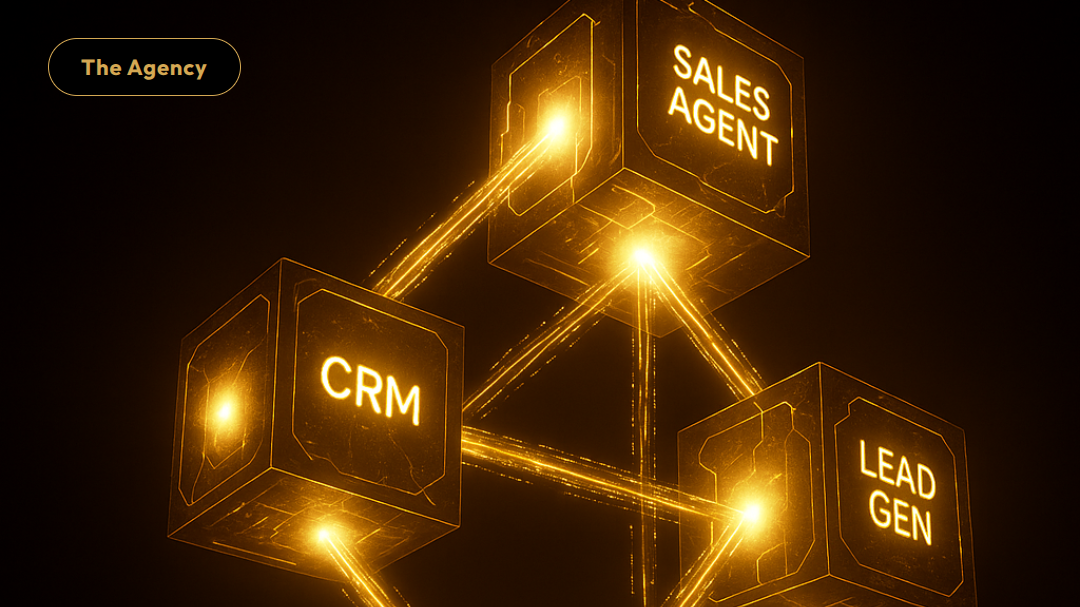
Step 5: Add the other agents. Once lead generation and sales are running, add content and SEO. The agents compound together. A content agent amplifies the lead generation agent. An SEO agent provides inbound leads that the sales agent can close.
By the end of Q3 2026, your "marketing team" will be one person managing four AI agents, handling the volume that used to require a team of five, and focusing entirely on strategy. Your cost per lead will have dropped. Your close rate will have improved because the agent never sleeps. Your revenue per person will have grown substantially.
This is not a prediction for 2027. This is what is happening now, in June 2026. The agencies that are winning have already started. For more on how to build and deploy AI agents for your sales process, see our AI agent strategy.
The future of marketing is not bigger teams. It is smarter agents. The teams that train them first will own their markets.
For more context on how these agents work together, visit the AI Agents section of our resources hub.
Want to see what your business is leaving on the table?
I want a free AI audit Takes 30 seconds. 100% free. No call, no card.Frequently asked questions
What AI agents are marketing teams actually using in 2026?
The four core agents are lead generation (research and enrichment), sales outreach (personalised outreach and follow-up), content (production and distribution), and SEO optimisation. Most teams start with lead gen or outreach because those two deliver measurable results first.
How long does it take to train an AI agent for sales?
Most teams invest 4 to 6 weeks in training before the agent outperforms a human salesperson. This means writing out your ICP, competitive positioning, objection handlers, tone of voice, and playbooks, then iterating with real prospects. After 30 days of testing and refinement, the trained agent typically handles most routine outreach independently.
How much does it cost to run an AI marketing team?
A four-agent marketing stack (lead gen, sales, content, SEO) runs on API usage plus the platform subscriptions most teams already pay for (CRM, email, social posting). Set against the salary of a single mid-level marketer, the return is substantial.
What's the downside of replacing humans with AI agents?
AI agents need a strong business brief to succeed. They need to know your ICP, your value proposition, what makes you different, your voice, and your rules. A blank brief produces poor results. The investment is in training the agent, not building it. Once trained, the agent compounds in performance over time.
Can one person really manage four AI agents?
Yes. One person can manage the agents' performance, refine their prompts based on results, make judgment calls on deals that need human input, and review unusual edge cases. This frees that person from all routine work to focus on strategy. The arrangement works because the agents handle the volume; the human handles the judgment.
When should a company start using AI agents for marketing?
Now. June 2026 is the inflection point where AI agents have matured enough to handle real business workflows independently. The cost per prospect is low, training cycles are fast (4 weeks), and the teams seeing the biggest revenue gains are the ones who started training their agents first.