What is AI lead generation
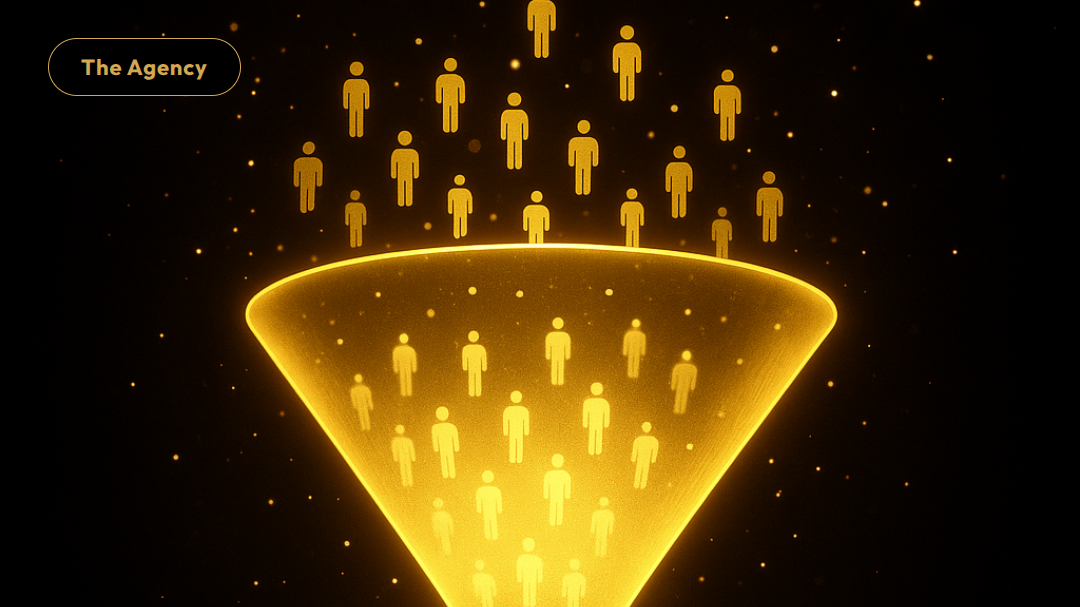
AI lead generation uses artificial intelligence to find, attract and qualify prospects automatically, reducing reliance on manual prospecting alone.
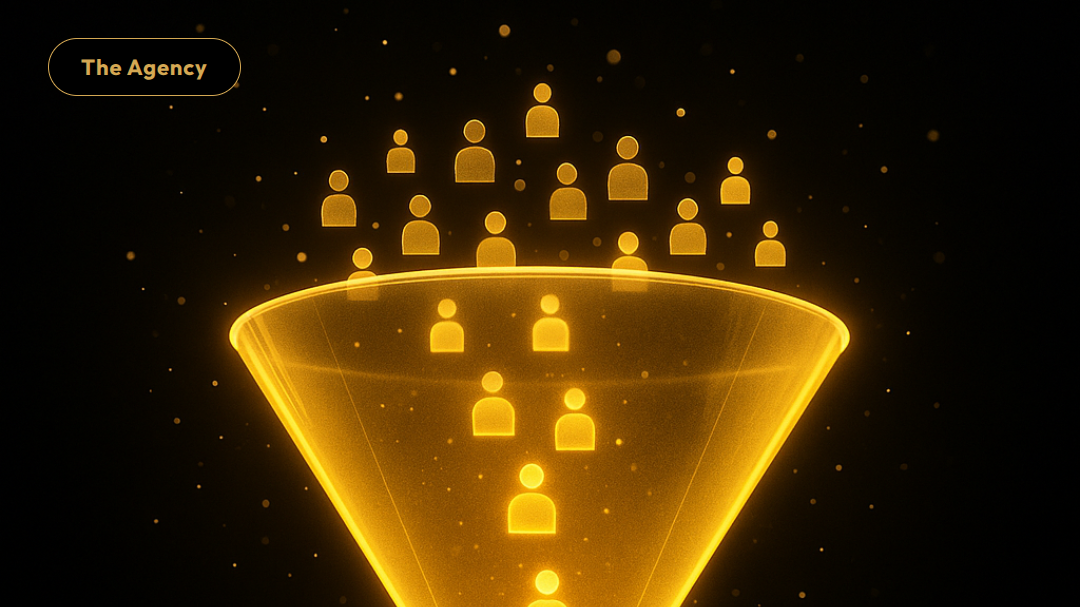
The businesses that grow fastest are the ones that let AI handle the prospecting so their people can focus on the conversations that actually close. Automation is not a shortcut; it is a multiplier for the humans who follow up well.The Agency
Want to see what your business is leaving on the table?
I want a free AI audit Takes 30 seconds. 100% free. No call, no card.Artificial intelligence can find, attract and qualify potential customers without relying on manual prospecting alone. It uses data signals, behavioural patterns and predictive models to surface the contacts most likely to buy. Businesses use it to improve pipeline quality and free sales teams to focus on conversations rather than research. This guide covers what AI lead generation is, how it works, where it fits inside a marketing funnel and how to choose and start the right approach for a given business situation.
What is AI lead generation
AI lead generation is the practice of using artificial intelligence to find, attract and qualify potential customers. It does not rely on manual prospecting alone. Traditional methods require people to search databases, send cold messages and judge prospect quality by instinct. AI replaces or supports much of that work. It processes large volumes of data, recognises patterns in behaviour and returns a ranked list of contacts that match a target profile. The result is a system that runs continuously, learns from outcomes and adjusts which prospects it ranks over time. It sits inside sales and marketing automation but goes further than simple scheduling or templating. It reasons about data rather than acting on fixed rules. A business using it can increase relevant contacts at the top of the pipeline while ensuring the right leads reach a salesperson at the right time.
How AI lead generation actually works
AI lead generation works by gathering data signals from many sources, running those signals through a trained model and returning the contacts that best match a target customer profile. The process has several distinct stages that operate together.
- Data is pulled from sources such as website behaviour, social activity, CRM records and third-party intent platforms to build a picture of each prospect.
- The AI model analyses patterns in that data, comparing new contacts against the characteristics of people who converted in the past.
- Each prospect receives a score or ranking that reflects how closely they match the ideal profile and how likely they are to engage.
- The system updates those scores continuously as new behaviour is observed, so a prospect who visits a pricing page is ranked higher than one who read a blog post.
- High-scoring leads are passed to a sales team or into an automated outreach sequence while lower-scoring contacts stay in a nurture flow until their behaviour changes.
The main types of AI lead generation
AI lead generation covers several distinct approaches. It is not a single tool. Understanding the types helps any business decide what it needs. Each approach suits a different part of the prospecting process. Many businesses combine more than one.
- Predictive lead scoring uses historical conversion data to rank existing contacts by their likelihood to buy, prioritising the pipeline without adding new names.
- Conversational AI, including chatbots and AI sales agents, engages website visitors or social media followers in real time and qualifies them through dialogue.
- Intent data tools monitor signals such as search queries, content consumption and review site visits to identify companies or individuals who are actively researching a solution.
- Automated outreach systems use AI to personalise and sequence messages across email, LinkedIn or other channels at a scale a human team could not sustain alone.
- AI prospecting tools scan public data sources to build lists of contacts that match a defined ideal customer profile, replacing manual list building entirely.
What AI lead generation can do that traditional methods cannot
Traditional lead generation relies on human researchers, instinct and fixed rules applied to each prospect. AI changes that in ways that are genuinely new. A human researcher can review a limited number of profiles each day. An AI model can process far more signals at once and weight them based on what has led to a sale. Traditional scoring uses static rules set once and rarely changed. AI models retrain on real outcomes and adjust as buying behaviour shifts. The clearest difference is timing. Manual prospecting finds a lead when someone has time to look. An AI system can flag a contact the moment their behaviour signals intent, day or night. It also removes individual bias from early qualification. The same criteria apply to every contact, regardless of who might otherwise have reviewed it.
Key features to look for in an AI lead generation system
When evaluating AI lead generation systems, not all platforms that carry the AI label offer the same depth of functionality. The differences matter when it comes to real pipeline performance. Understanding which features mark out the stronger options helps any business make a clearer decision before committing. The following features are worth looking for.
- Dynamic lead scoring that updates in real time as new behavioural signals arrive, rather than scoring once on sign-up and never again.
- Integration with your existing CRM, ad platforms and communication tools so data flows without manual exports or imports.
- Transparent scoring logic that lets a sales team understand why a lead was ranked highly, not just what score it received.
- Multi-channel data ingestion so the model draws on website activity, email engagement, social signals and intent data together.
- Feedback loops that allow the system to learn from sales outcomes, improving its predictions as your team marks leads won or lost.
Read about our AI lead generation.
How AI qualifies and scores leads automatically
Automated lead qualification works by teaching a model what a good lead looks like based on real conversion history, then applying that learning to every new contact. The model trains on attributes that correlated with a sale in the past. These might include company size, job title or pages visited. Content downloaded, time on a pricing page and response speed also matter. When a new prospect enters the system, the model compares their attributes against those patterns and assigns a score. Contacts above a threshold go to a sales team. Those below stay in a nurture sequence. The key difference from a manual qualification call is consistency. The AI applies its criteria to all contacts at once. It does not tire and it updates scores as behaviour changes. A contact who ignored emails for months but then viewed a case study moves up the ranking automatically. No one needs to notice.
How AI lead generation fits into a wider marketing funnel
Understanding where AI lead generation sits inside a wider marketing funnel helps clarify what it can and cannot do on its own. It operates at several points within the funnel rather than replacing the whole structure. At the top, AI prospecting tools and intent data platforms identify people who are entering a buying journey, expanding the pool of contacts before they have interacted with a brand directly. In the middle, AI scoring models work on contacts already in the database, separating those ready for a sales conversation from those who need more nurture. At the bottom, AI outreach tools help sales teams follow up at the right moment with personalised messages.
Content, paid media and SEO bring traffic and awareness. AI lead generation then turns that traffic into a qualified pipeline by identifying and ranking the contacts that best match the target profile and show the strongest buying signals. Sharper AI qualification also makes paid media budgets more efficient by focusing effort on the traffic most likely to convert.
Real world examples of AI lead generation in practice
Real scenarios make the technology easier to assess against a specific business context.
- A software company uses an AI sales agent on its website to qualify visitors in real-time chat. It asks about company size and use case before routing enterprise enquiries to an account executive.
- A professional services firm uses intent data to identify companies that have recently searched for relevant terms. Those names go to its business development team as warm prospects.
- A property business uses predictive scoring on its CRM to identify which past enquirers are most likely to re-engage, then triggers a targeted outreach sequence.
- A recruitment agency uses an AI prospecting tool to build lists of hiring managers at companies that have recently posted relevant roles, replacing a manual search that previously took days.
- An e-commerce brand uses AI to score its existing customer base by likelihood to upgrade, feeding the highest scorers into a personalised upsell campaign.
The biggest mistakes businesses make with AI lead generation
Treating AI lead generation as a fully hands-off system is a common mistake. Results often fall short when human judgement is removed too early. Each error follows a clear pattern. Over-relying on automation means outreach goes out without review. Personalisation feels hollow when the model lacks enough context. Poor training data is another problem. The AI learns from bad examples. It then surfaces contacts that look like past failures, not past wins. Ignoring follow-up wastes qualified leads. A good prospect with no meaningful conversation is a missed opportunity. Setting up a system and never reviewing it is also risky. Models drift as market conditions shift. Scaling too fast before the scoring logic is validated fills a pipeline with low-quality contacts. That erodes sales team trust in the whole approach. Each of these mistakes can be avoided with regular review and a clear human role at every stage.
The limits and risks of using AI for lead generation
AI lead generation has real limits. Any business should understand them before choosing an approach. The technology is effective at pattern matching and scoring at scale. It does not replace nuanced relationship building, which still needs human judgement and trust built over time.
Data protection rules vary by region. An automated outreach system that contacts people without a lawful basis can create legal exposure. Biased training data is another concern. If past contacts were not representative of the full market, the AI will rank some groups lower than they deserve. AI also struggles with complex or long sales cycles where conversion signals are subtle.
AI lead generation is best understood as a tool, not a decision-maker. It improves prospecting decisions and sharpens qualification, but the decisions themselves still require human involvement. Human oversight matters at every stage.
What data does AI lead generation need to work properly
The quality of results from any AI lead generation system depends directly on the quality of the data that feeds it. Understanding what data is needed is an important step before setup begins. Firmographic data covers company size, industry, location and revenue range. Contact-level data covers job titles, seniority and department. Behavioural data covers actions taken on a website, in emails or across social channels, giving the model signals about where a contact is in their buying journey. Historical CRM data covering won and lost deals is particularly important because it teaches the model what a successful conversion actually looked like. Where any of these data types are missing, incomplete or out of date, the model will produce less reliable results. A business should plan to fill those gaps as part of its setup process rather than after launch.
Take our free AI growth audit: use it and see it before you buy.
How to measure whether AI lead generation is working
Measuring whether AI lead generation is working means looking beyond raw lead volume. Quality and progression through the pipeline matter more. Volume alone says little about whether the right people are being found. Useful signals span several areas. Pipeline quality shows whether AI-sourced leads reach a sales conversation. It also shows how many of those conversations lead to a proposal. Conversion to close matters too. These signals reveal whether the AI is surfacing contacts that are genuinely relevant. Scoring accuracy is another signal worth tracking. Review leads the AI ranked highly that did not convert. Also review leads it ranked poorly that a salesperson closed. A pattern of errors in either direction points to a flaw in training data or logic. Velocity matters as well. If AI-sourced leads move through the pipeline faster than those found manually, the qualification is working. Speed of progression is a strong sign the model is calibrated well.
How to choose the right AI lead generation approach for your business
Choosing the right AI lead generation approach means matching the method to the sales model, the existing data and the team capacity available to act on results. A short, transactional sales cycle suits conversational AI and intent data tools. A long, relationship-driven cycle suits predictive scoring and personalised outreach sequences.
Team size matters. A small team can be overwhelmed by a high volume of scored leads if there is nobody to follow up. The AI should surface only as many contacts as the team can meaningfully reach. Existing technology matters too. A tool that does not connect to the CRM already in use creates manual work.
A well-structured CRM and a clear ideal customer profile are both needed first. Without those foundations, any AI lead generation system finds it difficult to learn reliably. A weak data foundation limits what any system can achieve, regardless of how sophisticated the technology is.
How to get started with AI lead generation
Starting with AI lead generation takes preparation. Technology should come later. The first step is auditing existing data. Check what is held in the CRM. Look at how clean and complete it is. Confirm it includes enough conversion history to train a useful model. The second step is defining a clear ideal customer profile. Base it on contacts who have actually bought. Do not rely on assumptions. The third step is choosing a limited pilot. Pick one channel or one segment of the pipeline. Apply AI there first. Do not try to automate everything at once. The pilot generates real data. That data improves the model before it is used more broadly.
The early phase is a build and training phase. Groundwork must be laid before results are expected. Rushing past that phase produces a system that goes live too soon. Confidence in the approach can erode quickly when that happens. The Agency builds AI systems and AI agents for businesses.
Want to see what your business is leaving on the table?
I want a free AI audit Takes 30 seconds. 100% free. No call, no card.Frequently asked questions
What is AI lead generation in simple terms?
Artificial intelligence analyses data signals and behaviour patterns to surface the contacts most likely to buy, reducing the need for manual prospecting. It automates much of the work involved in finding and qualifying potential customers.
Is AI lead generation suitable for small businesses?
It can be, but a small business needs clean data and a defined ideal customer profile first. The approach should match the capacity of the team that will follow up on the leads the system surfaces.
How long does it take for AI lead generation to produce results?
Month one is typically a build and training phase. Meaningful pipeline results depend on data quality, lead volume and how consistently the sales team acts on the contacts the AI surfaces.
What is the difference between AI lead generation and a chatbot?
A chatbot handles conversational qualification by engaging a visitor and asking questions to decide whether they are worth pursuing. This is one approach within a broader category that also includes predictive scoring, intent data monitoring and automated outreach.
Can AI lead generation replace a sales team?
No. AI improves how prospects are found and qualified. It does not replace the human conversations needed to build trust, handle objections and close deals. Sales teams remain essential.
What data does an AI lead generation system need?
It needs firmographic data, contact-level data, behavioural data and historical CRM records showing past won and lost deals. Incomplete or poor-quality data produces unreliable scoring.
How do I know if my AI lead generation system is working?
Track pipeline quality signals such as the proportion of AI-sourced leads that reach a sales conversation and the rate at which those conversations convert, rather than focusing on raw lead volume alone.
What are the main risks of AI lead generation?
The main risks include biased training data that narrows the prospect pool, regulatory exposure from unlawful outreach and over-reliance on automation without adequate human follow-up at key pipeline stages.