AI Lead Generation: How It Finds and Qualifies Buyers Before Your Sales Team Picks Up the Phone
AI lead generation finds, scores and qualifies buyers automatically, so your sales team spends more time closing and less time chasing cold prospects.

The businesses winning right now are not the ones with the biggest sales teams, they are the ones with AI agents that never sleep, never forget to follow up, and never waste time on a prospect who was never going to buy.The Agency
Find the gaps leaking the most revenue
Show me my revenue leak Your annual leak in pounds, in 30 seconds. Free.AI lead generation delivers more qualified buyers to your sales team by automating the entire process of finding, scoring and nurturing prospects, so your people spend their time on conversations that are genuinely likely to result in revenue rather than cold outreach that rarely converts.
Why Traditional Lead Generation Is Leaving Revenue on the Table
For most businesses, lead generation is one of the most resource-intensive activities in the entire commercial operation. Sales reps spend a significant portion of their working week identifying prospects, researching companies, writing outreach messages and following up with contacts who may never have been a realistic fit in the first place. Marketing teams build campaigns and hand over lists of names that sales then has to manually triage. The handoff is messy, the criteria are inconsistent and the result is a pipeline that looks full on paper but converts at a fraction of its potential.
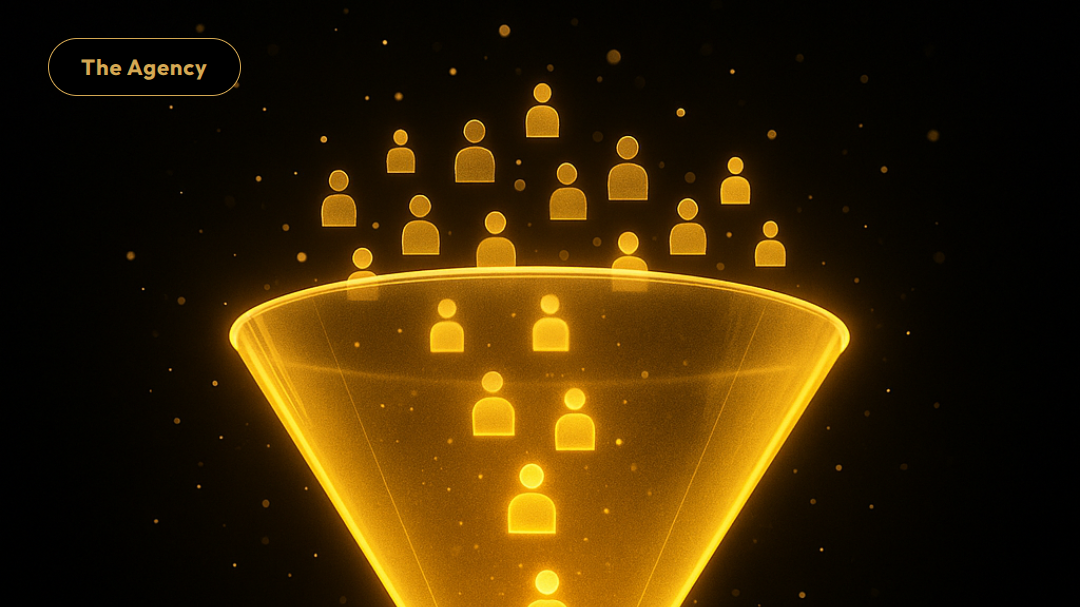
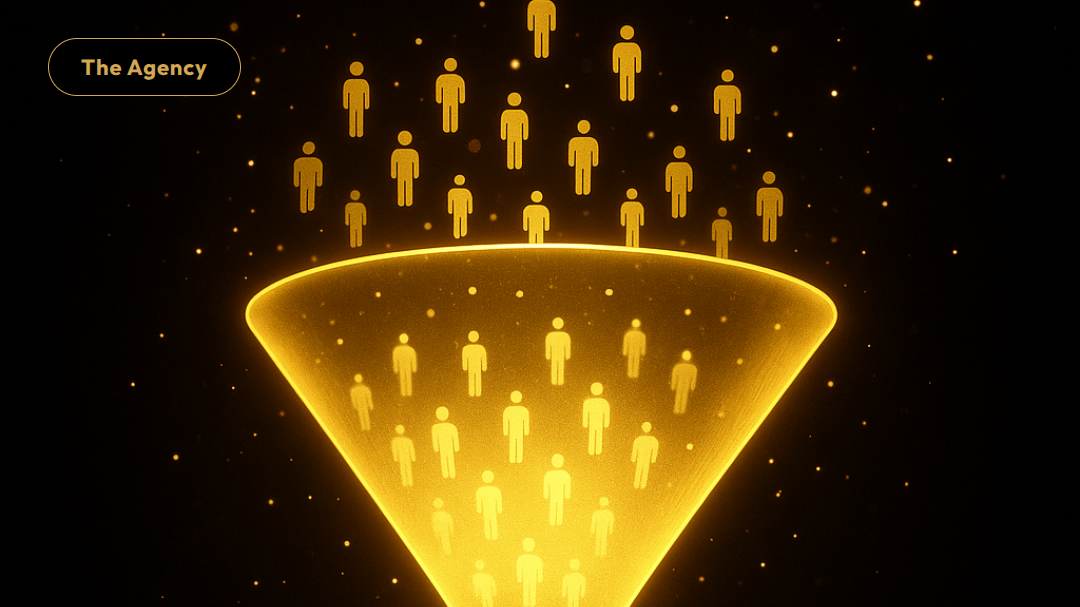
This is not a people problem. It is a process problem, and it is one that AI agents are uniquely positioned to solve. Where a human rep can research and contact a handful of prospects in a day, an AI agent can process thousands of signals across multiple channels simultaneously, applying consistent criteria to every single contact it evaluates. The gap in efficiency is not marginal. It is enormous.
The consequence of not addressing this is not just wasted time. It is lost revenue. Every hour a talented sales rep spends on manual prospecting is an hour they are not spending building relationships with buyers who are close to a decision. Every warm lead that slips through because nobody followed up at the right moment is a deal that went to a competitor. AI lead generation closes these gaps systematically, and businesses that adopt it early are building a compounding advantage over those that do not.
How AI Agents Find Prospects You Would Otherwise Miss
The first job of an AI lead generation system is discovery, and this is where it immediately outperforms traditional approaches. A human researcher can only monitor so many sources at once. An AI agent has no such limitation. It can simultaneously monitor search behaviour, social media engagement, content consumption patterns, job postings, company news, third-party intent data feeds and your own CRM history to build a continuously updated picture of who is in-market right now.
Intent data is particularly powerful here. When a prospect visits a competitor's pricing page, downloads a comparison guide or starts searching for solutions in your category, that behaviour leaves a trail. AI agents read that trail and surface the prospect to your team at precisely the moment their buying intent is highest. This is fundamentally different from traditional outbound prospecting, where you contact people according to a schedule rather than according to their readiness to buy.
AI also excels at expanding your addressable market by identifying look-alike prospects, companies and individuals who share the characteristics of your best existing customers but who have never been on your radar. By analysing your historical wins and building a detailed profile of what a successful customer looks like, the AI can search for similar prospects at a volume and consistency that no human team could replicate. The result is a pipeline that grows not just in size but in quality, because every name in it has been surfaced for a reason.
The Qualification Engine: Scoring Buyers With Consistency and Speed
Finding prospects is only half the challenge. The more expensive problem for most businesses is qualification, specifically the time and effort it takes to determine which of those prospects are worth pursuing and in what order. Without a reliable qualification process, sales teams are essentially guessing, and that guesswork costs money.
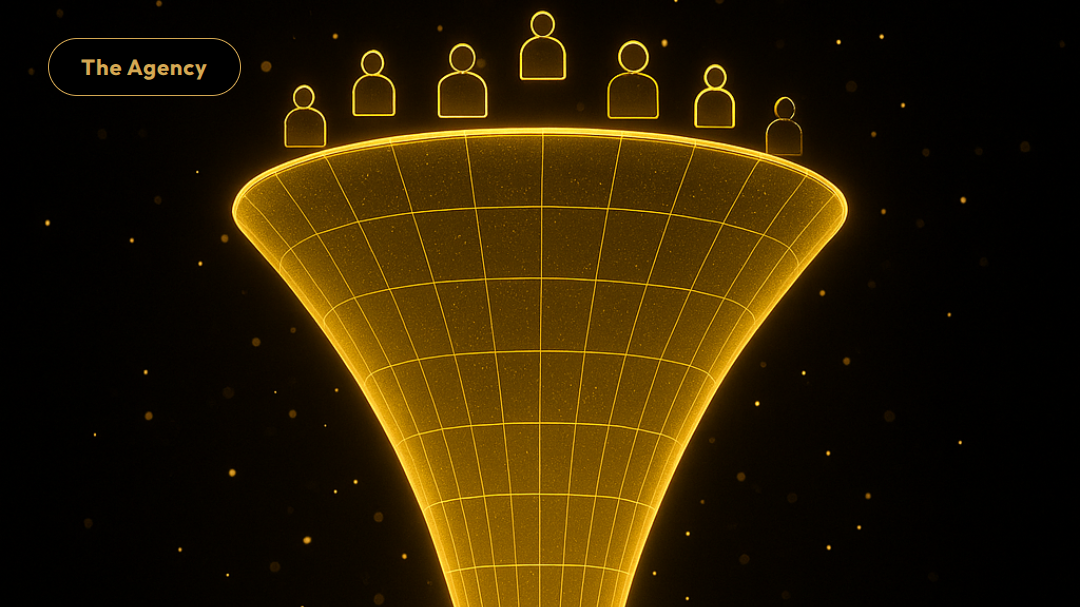
AI lead generation solves this through automated scoring. Every prospect is evaluated against a set of criteria that you define, which typically includes factors such as company size, industry, job title, engagement history, content consumption, recency of activity and fit with your ideal customer profile. Each factor is weighted, and the AI produces a score that reflects how closely this prospect matches the profile of someone likely to buy.
Critically, this scoring happens continuously and consistently. It does not depend on a rep having time to update a spreadsheet or a manager remembering to review the pipeline. The moment a prospect's behaviour changes, their score updates. If someone who has been dormant for months suddenly starts engaging heavily with your content, the AI flags them immediately. If a highly scored prospect goes quiet, the system notes that too and adjusts accordingly.
This kind of real-time qualification intelligence means your sales team always knows where to focus. Rather than working through a flat list in the order they received it, they can prioritise the conversations most likely to result in a closed deal today. That is a significant shift in how sales time is allocated, and it shows up directly in conversion rates and revenue.
Nurturing at volume Without Losing the Human Feel
One of the persistent challenges in lead generation is the gap between first contact and sales readiness. Most prospects are not ready to buy the moment they first encounter your business. They need time to understand the problem, explore solutions and build confidence in your approach. Traditionally, nurturing this group has required either a large marketing team running complex email sequences or a sales team making regular check-in calls that are easy to deprioritise when the quarter gets busy.
AI agents handle nurturing automatically and at a level of personalisation that would be impossible to replicate manually. Rather than sending every prospect the same sequence of emails on the same schedule, an AI system delivers content and messages that are tailored to where each individual is in their journey and what they have demonstrated interest in. A prospect who has spent time reading your case studies gets different content from one who has only visited your homepage. A prospect from a specific industry receives messaging that speaks to their context rather than generic copy.
This personalised nurturing keeps your brand present and relevant throughout a buying journey that may take weeks or months, without requiring any manual effort from your team. When the prospect finally reaches the point of readiness, they arrive at a conversation with your sales rep already educated, already warm and already leaning towards you. That is a very different starting point from a cold outbound call, and it makes the sales rep's job considerably easier.
For businesses looking to build this kind of capability, working with a team that understands both the technology and the commercial strategy is essential. You can explore how a custom AI lead generation strategy might work for your specific business and market by speaking with our team directly.
Connecting AI Lead Generation to Your Sales Process
The value of AI lead generation is only fully realised when it connects cleanly to the way your sales team actually works. An AI system that surfaces great prospects but delivers them into a broken or misaligned sales process will not produce the results the business needs. Integration is therefore not an afterthought. It is central to the entire approach.
At a practical level, this means ensuring that AI-generated leads and their associated data flow directly into your CRM in a format that your reps can act on immediately. It means defining clear handoff criteria so that everyone in the organisation understands what a qualified lead looks like and what action should follow when one is identified. It means creating feedback loops so that the AI learns from the outcomes of every conversation, whether a deal closed, stalled or went cold, and uses that learning to improve future scoring and prioritisation.
It also means aligning the AI's activity with your existing sales methodology. If your team uses a particular qualification framework or follows a structured discovery process, the AI should be configured to support and complement that approach rather than cut across it. When the technology and the human process are genuinely aligned, the two reinforce each other in ways that produce results neither could achieve independently.
Measuring What Matters: Revenue, Not Just Lead Volume
One of the most common mistakes businesses make when evaluating lead generation is measuring the wrong things. Lead volume is easy to track and satisfying to report, but it tells you very little about commercial performance. A pipeline full of poorly qualified leads is worse than a smaller pipeline of genuinely interested buyers, because the poor-quality leads consume time and resources that could have been directed towards real opportunities.
AI lead generation shifts the conversation from volume to quality, and the metrics that matter are correspondingly different. The numbers worth tracking are conversion rate from lead to qualified opportunity, average deal value from AI-sourced leads versus other sources, time from first contact to closed deal and the proportion of pipeline that meets your ideal customer profile criteria. These measures tell you whether the AI is genuinely driving revenue or simply generating activity.
Businesses that get this right find that AI lead generation does not just improve efficiency. It fundamentally changes the economics of customer acquisition. When your sales team is consistently talking to better-qualified prospects, conversion rates rise, deal cycles shorten and revenue per rep increases. The cumulative effect of those improvements, sustained over time, is a business that grows faster with a proportionally smaller investment in sales headcount than would otherwise be required.
That is the real promise of AI lead generation: not a technological novelty, but a genuine and measurable improvement in how your business wins customers.
Find the gaps leaking the most revenue
Show me my revenue leak Your annual leak in pounds, in 30 seconds. Free.Frequently asked questions
What is AI lead generation and how does it work?
AI lead generation uses intelligent software agents to identify, attract and qualify potential buyers on your behalf. These agents analyse behavioural signals, engagement data and intent markers to determine which prospects are most likely to convert. The result is a pipeline filled with warmer, better-matched leads rather than a broad list of names that your team must sift through manually.
How does AI qualify leads differently from a human sales rep?
A human sales rep qualifies leads through calls, emails and gut instinct, all of which take time and introduce inconsistency. AI qualifies leads by processing large volumes of behavioural and contextual data simultaneously, applying consistent scoring criteria every single time. It can assess how a prospect has engaged with your content, what pages they visited, how long they spent on pricing information and whether their profile matches your ideal customer. This means qualification happens continuously, not just when a rep has a spare moment.
Can AI lead generation work for small businesses, not just large enterprises?
Absolutely. In many ways, small businesses benefit more from AI lead generation because they lack the headcount to run high-volume outreach manually. AI agents level the playing field by performing the prospecting, nurturing and qualification work that a large enterprise might assign to an entire inside sales team. A small business can therefore punch well above its weight in terms of pipeline volume and lead quality.
What types of leads can AI find for my business?
AI can find inbound leads who have already shown interest in your content or website, as well as outbound leads who match your ideal customer profile but have not yet engaged with you. It can identify leads from social platforms, search behaviour, third-party intent data sources and your own CRM history. The breadth of sources it can monitor simultaneously far exceeds what any individual prospector could manage.
Will AI lead generation replace my sales team?
No, and that is not the goal. AI lead generation handles the time-consuming, repetitive work of finding and qualifying prospects so that your sales team can focus on what humans do best, which is building relationships and closing deals. Think of AI as the engine that fills your team's diary with conversations that are worth having, rather than cold calls that go nowhere.
How quickly can a business see results from AI lead generation?
The timeline varies depending on how well the AI is configured and how much existing data you have to work with, but most businesses begin to see measurable improvements in pipeline quality relatively quickly once the system is properly set up. Unlike traditional advertising campaigns that require weeks of testing before yielding insight, AI agents can begin learning from real prospect behaviour almost immediately and refine their approach on an ongoing basis.