How employees should think about an AI agent enhanced workplace
AI agents are reshaping work. Here is how employees can think clearly about them, collaborate well and stay in control.
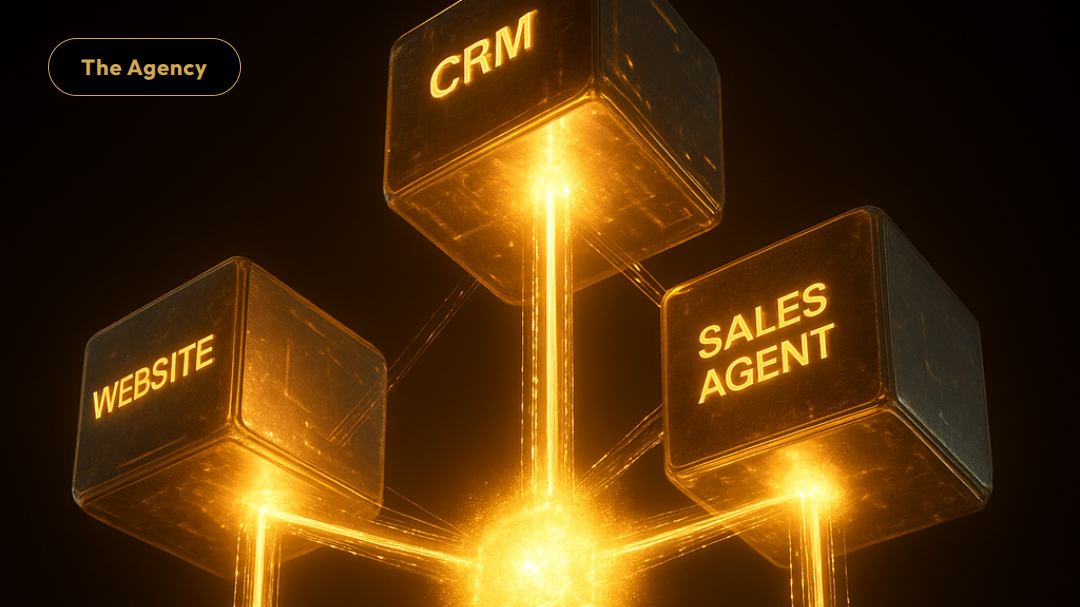
The employees who thrive are not the ones who fear AI agents or blindly trust them. They are the ones who learn to direct them with precision and curiosity.The Agency
Want to see what your business is leaving on the table?
I want a free AI audit Takes 30 seconds. 100% free. No call, no card.Employees should think about an AI agent enhanced workplace not as a threat, but as a shift in what their attention is for. AI agents take on repetitive, rules-based tasks so that human judgement, creativity and relationships can move to the front. The key mindset is one of active direction: you set the goals, review the outputs and decide what happens next. That framing turns uncertainty into something workable.
How employees should think about an AI agent enhanced workplace
The most useful starting point is to stop asking whether AI agents will replace you and start asking what they free you to do. AI agents are designed to absorb structured, repeated work: the kind that fills hours but rarely demands genuine judgement. When that work moves to an agent, your attention can shift to the reasoning, relationships and decisions that actually require a human. This is not a passive process. Employees who benefit most are those who actively direct their agents, give clear instructions and stay engaged with the results. Think of it less like handing work away and more like gaining a capable assistant that never forgets a step. The workplace does not change overnight, and no agent arrives fully tuned. Your role in shaping how it works is part of the job from day one.
What an AI agent actually is and how it differs from a chatbot
A chatbot waits for you to ask something, then responds. That is the full extent of its role. An AI agent does something fundamentally different: it perceives its environment, sets or receives a goal, plans the steps needed to reach it, takes actions using available tools and checks whether it succeeded. Here is what that means in practice:
- A chatbot is reactive, responding only when prompted by a human.
- An AI agent is proactive, capable of initiating a sequence of actions without a prompt at every step.
- A chatbot holds no memory of what it has done across sessions unless it is specifically built to do so.
- An AI agent can access external systems, run searches, update records and pass results to other tools.
- An agent's outputs are actions as well as words, while a chatbot's output is always text alone.
Understanding this distinction helps employees set the right expectations and use each tool for what it is actually built to do.
How an AI agent thinks, reasons and acts inside a workflow
Inside every AI agent is a loop that runs continuously until the goal is reached or the agent hits a limit. It begins when the agent receives a goal, which might come from a human, a schedule or another system. The agent then breaks that goal into steps, identifies which tools it needs and starts executing. After each action it checks whether the result moves it closer to the goal. If something goes wrong or the result is unexpected, it adjusts and tries again. This loop, sometimes called a reason-act-observe cycle, is what separates an agent from a simple script. A script follows fixed instructions; an agent adapts. Employees who understand this loop are better placed to write clearer goals, spot where an agent has gone off track and step in at the right moment. You are not watching a machine follow orders. You are watching something reason through a problem in real time, with all the strengths and gaps that brings.
What the five core components of an AI agent are
Every AI agent, regardless of its purpose, is built from the same five components. Knowing them helps you understand what any agent you work with is actually doing:
- Perception: the agent takes in information from its environment, whether that is text, data, calendar entries or messages from other systems.
- Memory: the agent stores relevant context, either within a session or across sessions, so it can act on what it already knows.
- Reasoning: the agent processes what it perceives and decides which steps to take next, drawing on its training and the goal it has been given.
- Action: the agent does something, such as sending a message, updating a record, running a search or calling another tool.
- Learning: over time, the agent refines its behaviour based on feedback, corrections and new data, becoming more useful with continued use.
These five components work together as a system, not in isolation, and your interaction touches all of them.
Which everyday work tasks AI agents handle most effectively
AI agents perform best on tasks that are structured, repeated and well defined. These are the tasks that tend to drain time without demanding much creative thought. In most workplaces, that covers a wide range of everyday activity. Scheduling and calendar coordination are a natural fit: an agent can find availability, send invites and reschedule without human intervention. Document summarisation is another strong area, where an agent can read a lengthy report and return the key points in a format you choose. Meeting preparation, including pulling together relevant background before a call, suits agent logic well. Data retrieval across systems, such as finding a customer record or pulling the latest project status, is a task agents handle faster than manual searches. Routine correspondence drafts, follow-up reminders and status updates are also well within current agent capability. The common thread across all of these is clarity: the goal is defined, the rules are known and the output can be checked against a clear standard.
How AI agents improve performance and output quality over time
AI agents do not arrive at their best performance on day one. Several factors shape how much better they get over time, and employees play a direct role in most of them:
- Feedback from humans is the single most powerful lever: when you correct an agent's output or mark a result as useful, that signal shapes future behaviour.
- Clearer prompts and better-structured goals reduce ambiguity, which means the agent spends less time on incorrect paths.
- Richer data access gives the agent more context to reason with, leading to more relevant and accurate outputs.
- Defined constraints help the agent focus: telling it what not to do is as useful as telling it what to aim for.
- Consistent review cycles catch drift, where an agent gradually starts producing outputs that no longer match your needs, before it becomes a larger problem.
Improvement is a shared effort between the agent and the people working with it, not something that happens automatically.
Why AI is genuinely beneficial for employees in the workplace
The practical case for AI in the workplace is not about replacing effort. It is about redirecting it. When an agent handles the structured, low-judgement tasks that fill a working day, employees recover time and cognitive space for the work that actually requires them. Information that once took considerable effort to locate can surface far more quickly. Routine decisions that previously needed human attention can be handled by rule-based agents, freeing people to focus on the exceptions and the genuinely complex cases. There is also a quality argument: an agent does not get tired, distracted or forget a step in a process. For tasks where consistency matters, that reliability has real value. None of this means AI agents are without flaws. But the scepticism worth taking seriously is not whether agents help at all. It is whether a given agent is well configured, properly overseen and matched to a task it can actually handle well. That is a question employees are well placed to answer.
Read about our AI Workforce.
How employees can collaborate with AI agents rather than compete
The most productive mental model is to treat an AI agent the way you would treat a capable but inexperienced colleague. That person needs a clear brief, honest feedback and a defined scope. They should not be handed a vague task and expected to interpret your intent perfectly. They should not be left to work without any check-in. And they should not be blamed for failing when the instructions were unclear. The same logic applies to AI agents. When a result is wrong, the first question is whether the goal was clear enough, not whether the agent is broken. When an agent does something unexpected, the useful response is to correct it explicitly and note what went wrong. Collaboration also means knowing when not to delegate: some tasks need your judgement, your relationships or your accountability, and no agent should stand in for those. Setting those boundaries early makes the working relationship more effective for everyone involved.
What roles and responsibilities shift when AI agents join a team
When AI agents absorb structured tasks, the shape of most roles changes in a predictable direction. The work that moves to agents tends to be execution: following a process, retrieving information, formatting a document, sending a scheduled message. The work that remains with humans, and often grows in importance, tends to be judgement: deciding which goal to set, reviewing whether outputs are fit for purpose, escalating edge cases and taking responsibility for outcomes. In practice, this means employees often find themselves spending more time on interpretation, communication and decision-making and less on manual task execution. Some roles evolve towards managing agent workflows, which is a new skill set. Others deepen their focus on the relational and creative work that agents cannot replicate. Neither shift is effortless. Both require employees to be honest about which parts of their current role are genuinely human work and which are habits that an agent could handle more efficiently.
What types of AI agent are available and how they differ
Not all AI agents work the same way, and knowing the categories helps employees set realistic expectations:
- Reactive agents respond to their immediate environment without memory or planning. They are fast and reliable within narrow tasks but cannot adapt to anything outside their defined triggers.
- Goal-based agents work towards a stated objective, planning steps and adjusting as they go. These are the agents most common in workplace tools today.
- Learning agents update their behaviour based on experience and feedback, becoming more useful over time with proper oversight.
- Multi-agent systems involve several agents working together, each handling a different part of a larger workflow, with outputs passed between them.
Reactive agents suit simple, fixed processes. Goal-based agents suit more varied work where the path to the outcome may differ each time. Learning agents require more investment in feedback but return more value. Multi-agent systems are suited to complex workflows that no single agent could manage alone.
Common mistakes employees make when working with AI agents
Most problems with AI agents in the workplace trace back to a small number of recurring errors. Over-trusting outputs is the most common: employees accept what an agent produces without checking it against their own knowledge or the source data. This is especially risky in tasks where accuracy matters and errors are hard to spot without context. Giving vague instructions is a close second. An agent cannot read intent; it works with what it is given. A brief like "summarise this" will produce a weaker result than "summarise this in three bullet points for a non-technical audience." Failing to review agent actions before they reach customers, colleagues or systems is another serious error. Treating an agent as a black box, either expecting it to succeed without input or giving up when it fails without investigating why, removes the human oversight that makes agent use safe and effective.
Take our free AI growth audit: use it and see it before you buy.
The real limits of AI agents employees should never ignore
Current AI agents have genuine limits that no amount of good configuration removes. They cannot make nuanced ethical judgements reliably. When a situation involves competing values, cultural context or moral weight, an agent will apply pattern-based reasoning that may produce a plausible but wrong answer. They also struggle with novel problems, ones that look nothing like what they were trained on. An agent is very good at variations of things it has seen before and significantly weaker when the situation is genuinely new. Accountability is another firm limit: an agent cannot be held responsible for an outcome in any meaningful sense. The human who directed it, reviewed it or deployed it carries that responsibility. Agents also have knowledge boundaries, and they can confidently produce outputs that are outdated or simply incorrect when their training data does not cover the situation. Employees who treat these limits as real constraints, rather than temporary bugs, will build workflows that account for them rather than being surprised by them.
How to decide which workplace tasks to hand to an AI agent
A simple decision framework helps employees work out whether a task suits an AI agent. Start by asking whether the task is repeated regularly. One-off tasks rarely justify the setup effort. Next, ask whether the rules governing the task are clear and consistent. If the right answer changes based on context that is hard to describe, the task is a poor fit. Then consider error tolerance: what happens if the agent gets it wrong? Low-stakes errors in a draft document are recoverable; errors in a client communication or a financial record may not be. Finally, consider sensitivity. Tasks involving personal data, confidential information or significant consequences need human oversight even if an agent handles part of the process. Tasks that score well on all four factors, repeated, rule-clear, error-tolerant and low-sensitivity, are strong starting points. Tasks that score poorly on any one factor deserve more caution, and tasks that score poorly on several should stay with a human for now.
Where an employee should start when their workplace adopts AI agents
The best starting point is a single task you already do repeatedly and find straightforward. Pick something where the rules are clear, the output is easy to check and a mistake would not cause a serious problem. Hand that task to an agent, review the result carefully and correct it explicitly when it falls short. Do this enough times with one task and you will develop a working sense of how to write clear instructions, where the agent needs guidance and how to spot when it has gone off track. Only after that baseline confidence is built does it make sense to expand. Move to tasks that are slightly more complex or higher-stakes, applying the same discipline of clear briefs and careful review. Avoid the temptation to automate everything at once: that approach tends to create problems that are harder to diagnose because too many variables changed at the same time. Gradual expansion, grounded in honest observation of what works, is a more reliable path to a well-functioning AI-assisted role.
Want to see what your business is leaving on the table?
I want a free AI audit Takes 30 seconds. 100% free. No call, no card.Frequently asked questions
Why is AI good in the workplace?
AI agents reduce the time employees spend on repetitive, structured tasks. This frees cognitive space for judgement, creativity and relationship-based work that genuinely requires human attention and accountability.
What are the 5 components of an AI agent?
The five components are perception, memory, reasoning, action and learning. Together they allow an agent to take in information, plan steps, act on its environment and improve its behaviour over time.
Is ChatGPT an agent or LLM?
ChatGPT is primarily a large language model. It can be extended with agent-like capabilities through tool access and memory, but in its default form it responds to prompts rather than acting autonomously towards a goal.
Which of the following can improve the performance of an AI agent?
Human feedback, clearer goal-setting, richer data access and consistent review all improve agent performance. Each one reduces ambiguity and gives the agent better signals to reason with over time.
How is an AI agent different from a chatbot?
A chatbot responds to prompts with text. An AI agent perceives its environment, plans steps towards a goal and takes actions across tools and systems, operating with far greater autonomy than a chatbot.
Can AI agents replace employees?
AI agents absorb structured, rules-based tasks but cannot replicate human judgement, accountability or nuanced reasoning. The more realistic shift is that roles evolve rather than disappear, with human focus moving to higher-value work.
What tasks should employees avoid giving to AI agents?
Tasks involving sensitive data, novel ethical judgements, high-stakes accountability or rules that change frequently based on context are poor fits for current AI agents and should remain under direct human oversight.