How AI Agents Keep Every Lead Warm Until They Are Ready to Buy
AI agents follow up, nurture and re-engage every lead automatically, so no prospect goes cold and every sales conversation happens at the right moment.
Most businesses lose revenue not because their leads are bad, but because the follow-up stops too soon. AI agents solve exactly that problem by staying present in every conversation until the prospect is ready to move forward.The Agency
Want to see what your business is leaving on the table?
I want a free AI audit Takes 30 seconds. 100% free. No call, no card.Businesses that deploy AI agents for lead nurturing consistently report that more of their pipeline converts, not because they are generating more leads at the top of the funnel, but because far fewer prospects are slipping through the gaps in the middle. The fundamental promise of AI lead generation is not simply that it saves time, it is that it recovers revenue that was always there but never captured. When every lead receives a consistent, personalised and timely follow-up regardless of how busy your sales team happens to be, the conversion rate across your entire pipeline improves. That is the commercial reality that is driving businesses across every sector to adopt AI agents as the backbone of their lead nurturing strategy.
The Problem That Has Always Cost Businesses Revenue
Every sales team has the same structural problem. A lead arrives, it receives one or two follow-up attempts, and then, if there is no response, it is quietly moved to a cold or dead pile. The sales person moves on to fresher opportunities, which is an entirely rational decision given the time and attention required to manage a full pipeline manually. But that rational decision leaves an enormous amount of potential revenue sitting untouched.
The reason this happens is not because your sales team lacks skill or motivation. It happens because following up with every lead, at the right interval, with the right message, for as long as it takes, is simply not something a human team can do cost-effectively without substantial resource. A business generating a meaningful volume of leads each month cannot realistically maintain a personalised, ongoing conversation with every single prospect indefinitely. Something has to give, and it is almost always the leads that did not convert quickly.
This is where the gap between potential revenue and actual revenue quietly widens over time. Research into buyer behaviour consistently shows that a large proportion of leads that do not convert immediately eventually do buy, often from a competitor who simply stayed in touch longer. The cost of losing those prospects is significant, but it has historically felt unavoidable. AI agents change that calculation entirely.
What AI Agents Actually Do in a Nurture Sequence
AI agents do not simply send automated emails on a fixed schedule. That model has existed for years in the form of basic email marketing platforms, and while it is better than nothing, it lacks the responsiveness and contextual awareness that converts a warm prospect into a ready buyer.
A well-configured AI agent reads the conversation. It monitors how a lead responds to each message, what links they click, what questions they ask and how their language shifts over time. It uses those signals to determine what to say next, when to say it and through which channel. If a lead opens every email but never clicks a call-to-action, the agent might shift its approach, offering a piece of content rather than a booking link. If a lead suddenly asks a specific question about pricing or implementation, the agent recognises that signal and either answers it directly or alerts a human sales representative that this prospect is moving towards a decision.
This is the distinction that matters. AI agents are not sending messages into a void on a timer. They are engaged in an ongoing, adaptive dialogue that mirrors what a skilled sales person would do if they had unlimited time and perfect recall of every previous interaction. The result is that leads feel heard and attended to at every stage of their journey, which is precisely what keeps them warm.
Personalisation at a Level That Was Previously Impossible
One of the most significant advantages AI agents bring to lead nurturing is the ability to personalise communication at a level that no human team could sustain across a large pipeline. Personalisation in this context means far more than inserting a first name into a subject line. It means crafting each message based on the specific industry the prospect works in, the problem they have described, the content they have already engaged with and the stage of the buying journey they appear to be in.
A prospect in the early research phase needs different content and a different tone than a prospect who has already had a discovery call and is now comparing options. A lead from a small independent business has different concerns than a lead from a large enterprise organisation. AI agents can hold and apply all of that context simultaneously, across hundreds or thousands of active conversations, without any degradation in quality.
This matters commercially because personalised follow-up consistently outperforms generic follow-up in every measurable way. Prospects who feel that a business understands their specific situation are more likely to respond, more likely to engage further and ultimately more likely to buy. AI agents make that level of personalisation operationally viable for businesses of every size, not just those with the budget to hire large sales and marketing teams.
Long-Term Nurture: Where AI Agents Deliver the Greatest Advantage
The area where AI agents deliver their most dramatic commercial impact is in long-term lead nurture. These are the prospects who were genuinely interested at the point of first contact but were not yet ready to make a decision. Perhaps their budget cycle was not aligned, or a competing internal priority had pushed the decision back, or they were still early in their evaluation process. In a traditional sales environment, these leads are almost always abandoned.
An AI agent does not abandon them. It maintains a consistent, low-pressure presence over a timeline of weeks, months or longer, checking in at appropriate intervals, sharing relevant content and asking thoughtful questions that keep the conversation alive. When the prospect's circumstances eventually change, which they will, the agent is already there. There is no cold restart required, no awkward re-introduction, no loss of context. The relationship has been maintained throughout, and the transition from warm prospect to active buyer happens naturally.
For businesses with long sales cycles, in sectors such as property, financial services, professional services or enterprise software, this capability is transformative. If you want to understand how to build an AI lead nurture system that is specifically designed for your pipeline and your buying cycle, our custom AI lead generation strategy maps out exactly how to do it.
The Hand-Off: Getting the Timing Right for Your Sales Team
One of the concerns businesses raise most frequently when considering AI agents for lead nurture is how to ensure that prospects are passed to a human sales person at the right moment. Hand off too early, and the sales person is having the same exploratory conversation that the AI agent was already managing perfectly well. Hand off too late, and a prospect who was ready to buy might have moved on in frustration.
The most effective AI agent implementations solve this with a combination of behavioural triggers and intent signals. The agent is configured to recognise specific patterns of behaviour that indicate a lead has moved from the nurture phase into an active buying mode. These might include a sudden shift in the specificity of questions asked, a request for a proposal or demonstration, multiple visits to a pricing page, or a combination of engagement signals that suggest heightened interest.
When those signals appear, the agent either surfaces the lead to the sales team with a summary of the entire conversation history, or it transitions the conversation directly into a booking flow that puts a meeting on the calendar. The sales person who picks up that call knows exactly who they are speaking to, what that person cares about and where they are in their decision process. That context makes every sales conversation significantly more productive, which is another reason why businesses with AI-driven nurture sequences tend to close more of their qualified pipeline.
Building a Pipeline That Never Goes Cold
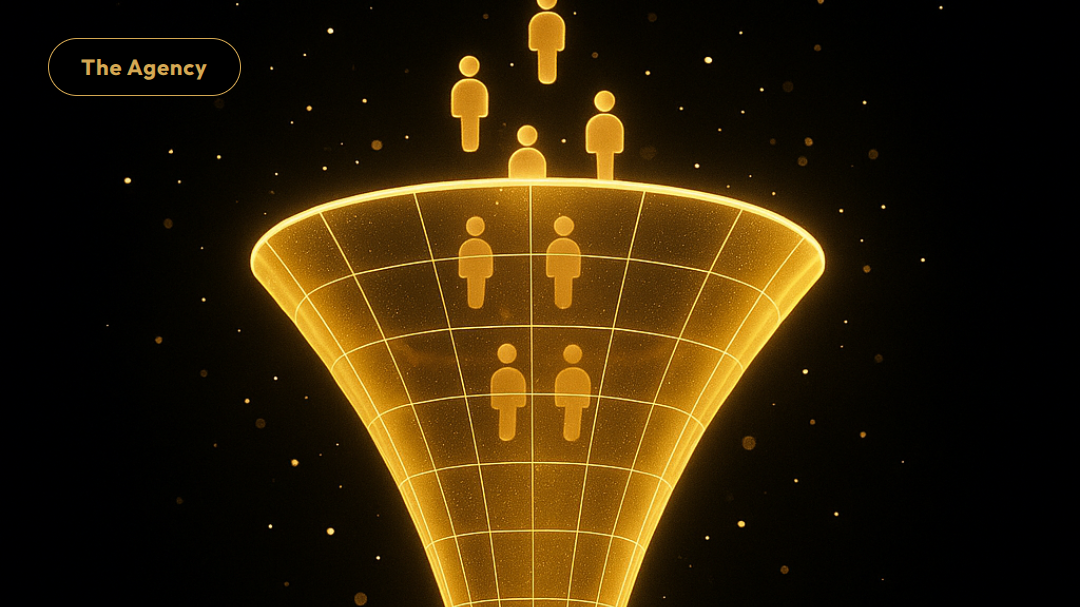
The ultimate commercial outcome of a well-implemented AI agent nurture system is a pipeline that is genuinely alive at every stage. Leads at the top are being welcomed and educated. Leads in the middle are being nurtured and guided. Leads that have gone quiet are being re-engaged with fresh relevance. And leads that are ready are being surfaced to your sales team at precisely the right moment.
This is not a theoretical ideal. It is the practical result of removing the human bandwidth constraint from the follow-up process. When follow-up is no longer limited by how many hours your team has available, and when every message is informed by context rather than guesswork, the pipeline stops leaking.
Businesses that grow their revenue most consistently are not always those with the highest lead volume. They are the ones that convert the highest proportion of the leads they already have. AI agents are the mechanism that makes that possible, by ensuring that every lead receives the attention it deserves, for as long as it takes, and that no prospect ever has to wonder whether your business is still interested in helping them.
Want to see what your business is leaving on the table?
I want a free AI audit Takes 30 seconds. 100% free. No call, no card.Frequently asked questions
How do AI agents keep leads warm without being annoying?
AI agents send contextually relevant messages based on a prospect's behaviour, interests and stage in the buying journey, rather than generic broadcast emails. Because each touchpoint feels timely and relevant, prospects experience it as helpful rather than intrusive. The cadence adjusts automatically depending on how the lead is responding, so no one receives a flood of irrelevant follow-ups.
What happens to leads that go cold with traditional follow-up?
With traditional follow-up, cold leads are usually abandoned after a handful of attempts because sales teams simply do not have the bandwidth to maintain long-term nurture sequences manually. AI agents remove that constraint entirely, continuing to engage a lead for weeks or months with no additional effort from your team. This means leads that would previously have been lost are still in an active conversation when they finally become ready to buy.
Can AI agents personalise messages for different industries or buyer types?
Yes. AI agents can be configured with distinct personas, messaging frameworks and content libraries tailored to specific industries, buyer roles or product lines. A lead from a retail business, for example, will receive different language, examples and offers than a lead from a professional services firm. This level of personalisation was previously only possible with a large, dedicated sales team.
How do AI agents know when a lead is ready to be passed to a sales person?
AI agents monitor engagement signals such as link clicks, reply sentiment, page visits and specific questions asked during conversation. When a combination of these signals suggests a lead has moved from curious to intent-driven, the agent flags or transfers the conversation to a human sales representative automatically. This means your team only invests time in conversations that are genuinely likely to convert.
Do AI agents work for businesses with long sales cycles?
They are particularly well suited to long sales cycles, where maintaining consistent contact over many months is both critical and difficult for human teams to sustain. AI agents can carry a conversation across a timeline of weeks, months or longer, adjusting their messaging as the prospect's needs and circumstances evolve. This makes them highly valuable in sectors such as B2B services, property, financial services and enterprise software.
What kinds of leads can AI agents nurture?
AI agents can nurture inbound leads from website forms, paid advertising and content downloads, as well as outbound leads identified through prospecting campaigns. They work across email, SMS, chat and social messaging channels, meeting prospects wherever they are most active. Whether a lead arrived yesterday or six months ago, an AI agent can re-engage them with a relevant, timely message.