
Why templates fail
A standard "sales automation" template works for 10% of businesses. The other 90% need custom systems because:
- Different industries have different sales cycles (SaaS: 8 weeks, luxury goods: 12 months, B2B services: 6 weeks)
- Different buyer personas require different messaging
- Different revenue models mean different lead scoring rules
- Different compliance requirements mean different data handling
Building the same system for every client is like selling the same suit to everyone. It fits no one well.
The answer: a repeatable process that builds custom systems fast.
The Custom Strategy Framework
Phase 1: Intake (Week 1)
Structured conversation to capture:
- Revenue model and pricing (subscription, project-based, usage-based)
- Sales cycle and deal size
- Customer personas (who buys, who influences, who blocks)
- Key differentiators (why you, not competitors)
- Current bottleneck (lead gen, qualification, closing, onboarding)
- Data landscape (where customer data lives now: CRM, email, spreadsheets, etc.)
Output: One-page intake summary that guides everything downstream
Phase 2: Brain Build (Weeks 1-2)
Create a knowledge graph:
- Customer voice: exact language your best customers use (from calls, reviews, support tickets)
- Competitor positioning: how you are different (features, price, values, outcomes)
- Sales playbook: step-by-step close process (from first touch to contract)
- Product specs: every feature, integration, use case, limitation
- Objection handling: common objections and proven rebuttals
- Content examples: 3-5 best-performing emails, landing pages, ads (the AI learns from these)
Output: A structured "brain" document (2,000-3,000 words) that all agents reference
Phase 3: Agent Configuration (Week 2)
Design 2-4 AI agents based on the bottleneck:
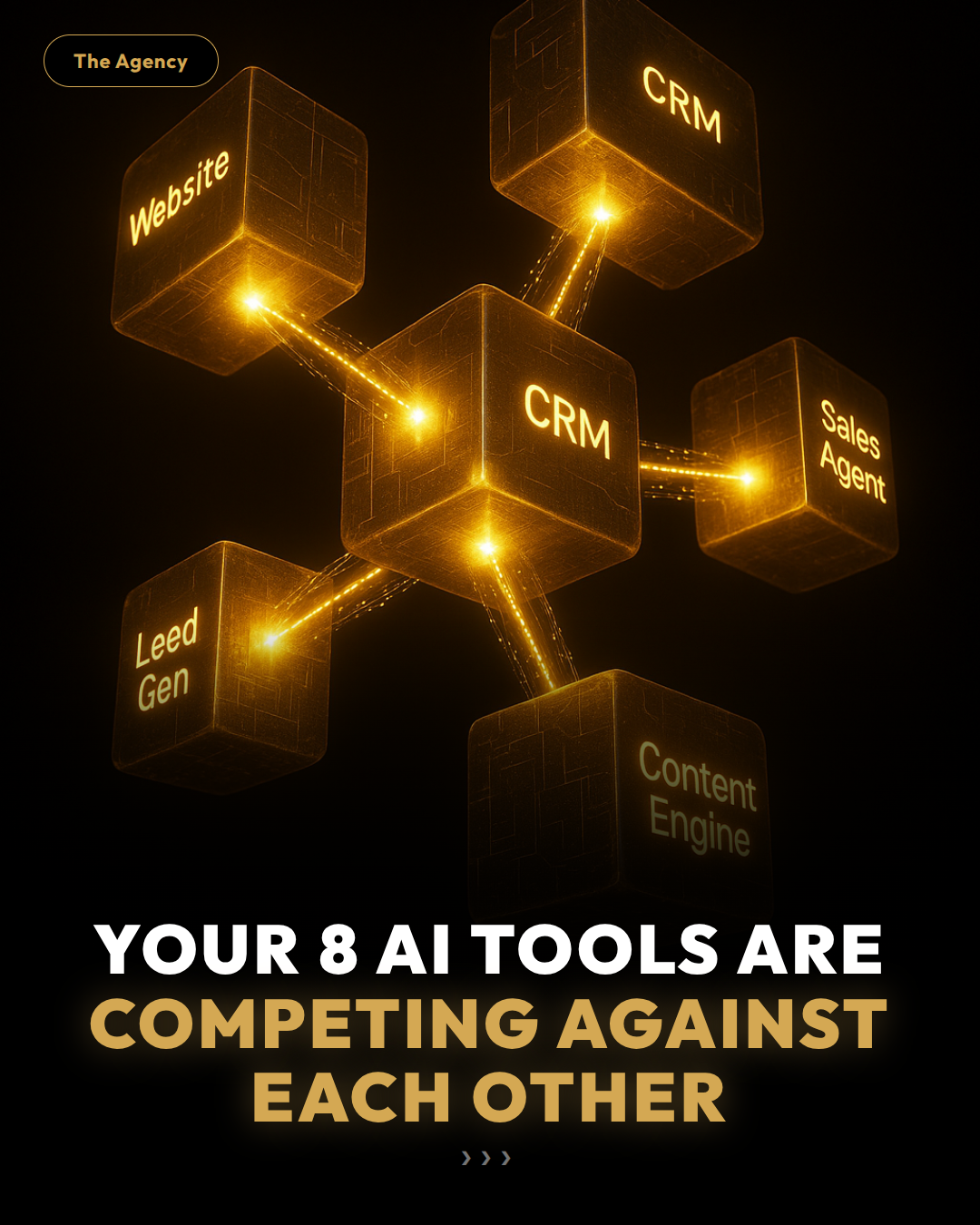
- Sales Agent (Abby): Qualifies and engages leads in WhatsApp/chat
- Content Agent: Generates blog posts, emails, ads, landing page copy
- Lead Gen Agent: Scrapes prospect lists, filters for fit, enriches contact data
- Proposal Agent: Generates custom proposals, slides, contracts
For each agent, configure:
- Knowledge base (the brain, past customer data, sales recordings, product docs)
- Tools (CRM API, email, calendar, payment processor)
- Rules (when to escalate, what not to touch, security guardrails)
- Prompts (personality, tone, guardrails, output format)
Output: Agent config files (prompts, tool definitions, guardrails)
Phase 4: Content and Training (Week 3)
Build the content engine:
- 10-20 high-performing email templates (cold, follow-up, objection, close)
- 5 landing page templates (lead magnet, product, pricing, demo)
- 3 content frameworks (blog posts, LinkedIn, ads)
- Sales process flowchart (what happens at each stage)
Train agents on edge cases:
- Run 50+ simulated sales conversations; tune agent responses
- Review agent-generated emails; refine tone and messaging
- Test lead scoring; adjust thresholds based on conversion data
Output: Trained agents ready to run, content library, edge case handbook
Phase 5: Testing (Week 4)
Run parallel testing:
- AI agents vs humans: Compare AI-qualified leads to human-qualified leads on conversion rate
- Content variants: A/B test AI-generated emails vs templates
- Data quality: Verify lead enrichment accuracy, CRM sync, data privacy
Adjust based on results:
- If AI qualification misses high-intent leads, retrain on missed examples
- If AI emails underperform, shift tone or CTA structure
- If lead data is stale, add more enrichment sources
Output: Test results and tuning recommendations
Phase 6: Deployment and Monitoring (Week 5)
Go live:
- Deploy agents to production CRM/chat platforms
- Route live leads to AI agents
- Monitor for errors, API failures, edge cases
- Build dashboards (qualified leads, response time, conversion rate, cost per lead)
Ongoing (Weeks 6+):
- Weekly reviews of agent performance
- Monthly brain updates (new competitive intel, updated objection handling, product changes)
- Quarterly strategy reviews (lead volume vs quality tradeoffs, ROI per agent, expansion opportunities)
Output: Live system, monitoring dashboard, monthly performance reviews
Timeline and investment
A typical custom strategy build:
- Duration: 4-5 weeks (with client availability)
- Team: 1 Strategy Lead (you) and 1 AI Engineer and part-time client SME
- Deliverables: 2-4 live agents, content library, brain document, monitoring setup
- Cost: $12k-$25k (depends on complexity and client data availability)
ROI: Most clients see break-even in lead cost within 8 weeks; positive ROI by month 4.
What makes it repeatable
The framework works because:
- Every phase has clear inputs and outputs (not vague)
- Each phase builds on the previous one (no rework)
- The process is discipline-driven, not talent-driven (any competent team can execute)
- The brain document is the single source of truth (all agents reference it)
- Testing is built in (no surprises at launch)
You can run this framework for a SaaS business, a law firm, a luxury brand, or an e-commerce company. The framework stays the same; the brain changes.
The wins
Clients who follow this framework report:
- Lead cost down 65% (AI qualification and enrichment vs manual)
- Close time cut by 50% (24/7 engagement and real-time handoff to human)
- Win rate up 25% (better-qualified leads, consistent messaging)
- Team morale up (no more manual email and qualification grunt work)
The custom strategy is not faster than a template. It is better. It fits the client's business, not the other way around.
That is the shift from product mindset to service mindset.
Start with the framework. The rest follows.