Why Fixing Your Systems With AI Is the Highest-Return Move You Can Make
AI tools bought on top of broken processes deliver nothing. Here is why repairing your systems first is the move that actually grows revenue in 2026.

Every business we speak to has more leads than it thinks. The problem is the gap between a lead arriving and someone actually responding to it, and that gap is where revenue disappears before AI ever gets a look in.The Agency
Get your AI growth plan, mapped to your business
Get my free AI plan 30 seconds. 100% free. No card.The businesses growing fastest with AI in 2026 are not the ones running the most content or the most ads. They are the ones that repaired their internal systems first, then pointed AI at the result. If your enquiry handling is unreliable, your lead follow-up is inconsistent, and nobody in the business can say with confidence what happened to last month's prospects, buying more AI tools will not change your revenue. It will simply make the chaos run faster. The order of operations is the whole argument, and getting it wrong is costing businesses more than most owners realise.
The Revenue Is Already There. It Is Just Leaking.
Most conversations about AI for business jump straight to acquisition: more traffic, more leads, more content to push into the top of the funnel. The assumption is that the problem is a shortage of enquiries. For most small and mid-sized businesses, that assumption is wrong.
The real problem sits in the gap between an enquiry arriving and somebody responding to it. That gap is where revenue disappears. A prospect contacts a business, receives no reply within a reasonable window, and moves on to whoever answers first. The business never knew the opportunity existed, never logged it, and has no way of recovering it. Repeat that across a week, a month, a quarter, and the lost revenue adds up to something significant, without any shortage of traffic or leads at all.
This is not a marketing problem. It is a systems problem. And because it is a systems problem, no amount of AI-generated content or AI-optimised advertising will fix it. Those tools work upstream of the gap. The gap itself remains open, and every new lead you generate falls through it at the same rate as the last one.
The first question any business should ask before investing in AI is not which tool to buy. It is: what actually happens when an enquiry arrives today? If the honest answer involves uncertainty, manual handoffs that sometimes get missed, or a follow-up process that depends on one person remembering to do something, that is the starting point.
Why AI Makes Broken Processes Worse, Not Better
There is a tempting logic to buying AI tools on top of existing processes. The thinking goes: our systems are a bit rough, but if we can automate parts of them, they will get better by default. In practice, the opposite tends to happen.
AI applied to a broken process does not repair the process. It accelerates it. If your enquiry response is inconsistent, an AI that responds faster will respond inconsistently faster. If your lead tracking is unreliable, an AI that logs more data will log unreliable data at higher volume. If your follow-up sequence has gaps, an AI running that sequence will hit those gaps more often because it is processing more leads through the same flawed structure.
The result is that problems which were previously manageable because the business was moving slowly become serious because AI has increased the speed of movement. Teams find themselves dealing with more noise, more half-completed automations, and more confused prospects, all while paying for tools that were supposed to make things easier.
This is not a criticism of AI. It is a criticism of the order in which businesses approach it. AI is a force multiplier. That is genuinely powerful when what you are multiplying is a sound process. When what you are multiplying is a broken one, the multiplication works against you. The capability of the tool is irrelevant if the underlying system it is operating on has not been fixed first.
You Cannot Measure What You Cannot See
There is a second problem that sits alongside the operational one, and it is arguably more damaging over time. A business that cannot account for its leads cannot tell whether anything it is doing is working.
If you do not know what happened to last month's enquiries, you cannot calculate your conversion rate. If you cannot calculate your conversion rate, you cannot tell whether a new tool improved it. If you cannot tell whether a tool improved it, you are buying tools on faith rather than evidence. And buying tools on faith, at the pace AI tools are being released and marketed in 2026, is an expensive way to operate.
This is the visibility problem. It does not require sophisticated reporting infrastructure to solve at the first level. It requires that every enquiry gets logged, every follow-up gets recorded, and every outcome gets noted. That is a systems discipline before it is a technology question. Once that discipline exists, even a simple view of what came in and what became a client will tell you more about your business than any amount of AI-generated analytics applied to invisible data.
Businesses that build this visibility before they invest in AI tools end up in a fundamentally different position. They can see which lead sources are performing. They can see where in the process prospects are dropping off. They can make decisions about where to apply AI based on actual evidence about where the gaps are. That is the foundation that makes every subsequent investment in AI marketing or AI lead generation meaningful rather than speculative.
Systems Work Compounds. Everything Else Depends on It.
One reason to prioritise systems repair over other AI investments is that its value compounds in a way that content or advertising does not. A piece of AI-generated content has a lifespan. An AI advertising campaign runs while the budget runs. But a system that reliably captures, responds to, follows up on, and tracks every lead continues to deliver value for as long as the business operates, and every additional tool or investment plugs into it cleanly.
When your enquiry system works, adding an AI agent to handle out-of-hours responses improves a system that already functions. When your follow-up sequence works, adding personalisation via AI improves a sequence that already converts. When your job and client tracking works, adding AI reporting on top gives you genuine insight rather than organised noise. Each improvement builds on the last because there is something sound to build on.
Contrast that with the alternative. A business that buys an AI chatbot before its enquiry handling is reliable now has a chatbot feeding leads into an unreliable system. A business that invests in AI lead generation before its follow-up sequence is consistent now has more leads falling through a wider gap. The tools are not the problem. The sequence is.
This is why the businesses seeing the clearest return from AI in 2026 tend to have done unglamorous work first: mapping their processes, identifying where things break, building reliable handoffs, and creating visibility into what happens at each stage. That work is not exciting to talk about in the way that AI content tools or AI ad platforms are. But it is the work that makes everything else pay off.
If you want to understand what this looks like in practice for your specific business, our custom AI strategy process for businesses ready to grow is the right starting point. It is built around your actual situation rather than a generic framework.
What Our Operations Team Actually Does
At The Agency, our Operations Team works with businesses at exactly this level. Before we recommend any AI marketing tool, any AI lead generation system, or any AI agent deployment, we map how the business currently handles its enquiries, leads, and client work from the moment a prospect makes contact through to the point where they either become a client or fall away.
That audit is almost always revealing. We find enquiries that are being responded to days after they arrive, because there is no automated acknowledgement and the inbox is checked when someone remembers. We find leads that were logged once in a spreadsheet and never followed up, because the follow-up responsibility was never formally assigned. We find jobs that exist in email threads and nowhere else, because no system was ever set up to track them. And in every case, we find revenue that the business had no idea it was losing.
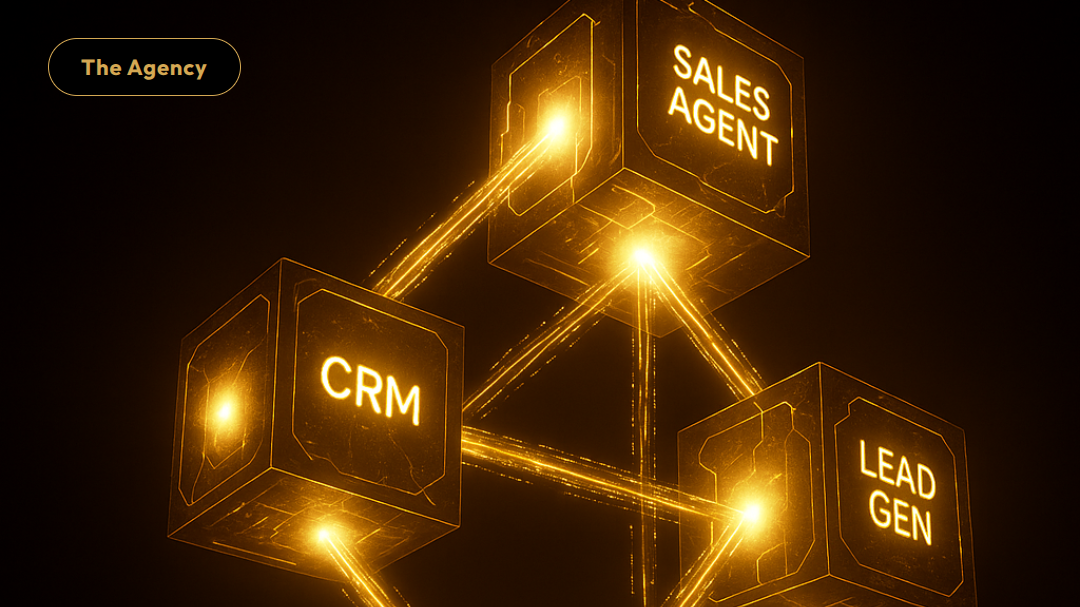
Once we can see the gaps, we introduce AI agents and automation to close them specifically. That might mean an AI agent that acknowledges every enquiry immediately, at any hour, and routes it correctly based on what the prospect needs. It might mean an automated follow-up sequence that runs without depending on a team member remembering to send a message. It might mean a simple tracking structure that makes the status of every lead and every job visible to everyone who needs to see it.
We then build AI marketing and AI lead generation on top of that foundation, because at that point it is worth building. Every new lead that comes in will be captured, responded to, followed up on, and tracked. The business can finally see what is working and what is not. And every further investment in AI compounds rather than leaks.
The argument for fixing your systems first is not that content and advertising do not matter. They do. It is that they cannot deliver their full return until the systems underneath them are sound. In August 2026, with AI tools multiplying faster than most businesses can evaluate them, the discipline to fix the foundation before adding the next layer is what separates the businesses growing steadily from the ones spending heavily and wondering why nothing is moving.
Get your AI growth plan, mapped to your business
Get my free AI plan 30 seconds. 100% free. No card.Frequently asked questions
Why should I fix my business systems before buying AI tools?
AI applied to a broken process does not fix the process, it simply makes the broken process run faster. If your enquiry handling, follow-up, or job tracking is unreliable, adding an AI layer on top will accelerate the chaos rather than resolve it. The order of operations matters: systems first, then tools.
What does AI systems repair actually mean for a small business?
It means mapping how an enquiry currently travels from the moment it arrives to the moment it becomes a paying client, then identifying every point where it stalls, gets forgotten, or falls through entirely. AI is then introduced to close those gaps, not to generate more noise on top of them. The result is that existing leads convert at a higher rate before any new traffic is needed.
Is AI lead generation useful if my follow-up process is broken?
Generating more leads into a broken follow-up system is one of the most expensive mistakes a business can make. You pay to acquire the enquiry and then lose the revenue because nobody responded in time or the lead was never logged. Fixing the response and tracking system first means every future lead generation effort compounds rather than leaks.
How do I know if my business systems are broken?
A straightforward test is this: can you say, right now, what happened to every enquiry your business received last month? If the answer involves guesswork, spreadsheets nobody updates, or conversations that only exist inside someone's email inbox, your systems have gaps. Those gaps are where your revenue is going before any AI tool has the chance to help.
What is the difference between AI marketing and AI systems work?
AI marketing typically means using AI to produce content, run campaigns, or generate leads at volume. AI systems work means using AI to ensure that what your business already does, responding to enquiries, following up with prospects, tracking jobs and client work, happens reliably every time. Both matter, but systems work has to come first because marketing without reliable follow-through simply wastes budget.
Can The Agency help us repair our systems before we invest in AI marketing?
Yes. Our Operations Team works with businesses specifically on this: auditing how enquiries, leads, and work currently flow through the business, identifying where revenue is being lost to process gaps, and introducing AI agents and automation to close those gaps. You can start that conversation through our custom strategy process, which is built around your actual situation rather than a generic package.