
Why Custom AI Strategy Is Beating Off-the-Shelf Automation for Lead Generation
Businesses using custom AI strategies are winning more leads and closing more sales than those relying on generic automation tools in August 2026.
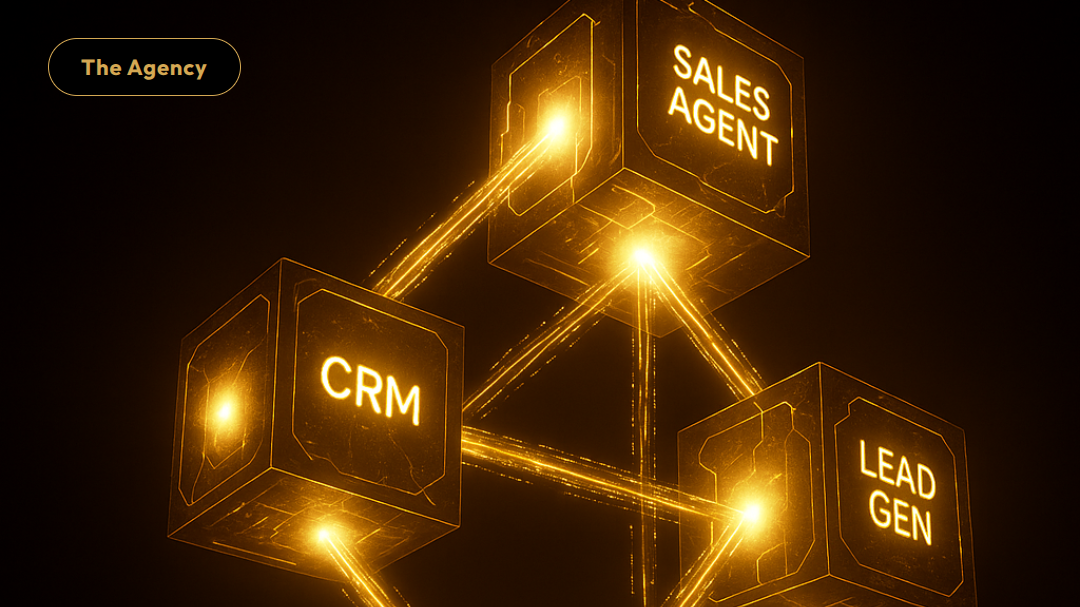
Off-the-shelf automation was built for the average business, and the average business gets average results. When we build AI strategy around a client's specific customer journey, the leads that come through are warmer, more qualified, and far easier to close.The Agency
Want to see what your business is leaving on the table?
I want a free AI audit Takes 30 seconds. 100% free. No call, no card.Businesses that invest in custom AI strategy are generating more qualified leads, shortening their sales cycles, and closing more revenue than competitors still relying on off-the-shelf automation tools. The gap between the two approaches has widened considerably in August 2026, as AI agent technology has matured and the limitations of generic platforms have become impossible to ignore. The businesses winning right now are not the ones with the biggest software subscriptions. They are the ones that treated AI strategy as a bespoke discipline rather than a commodity purchase.
The Problem With Generic Automation
Off-the-shelf automation tools were built to serve the broadest possible market. That design constraint, which made them easy to sell, is the same constraint that makes them difficult to win with. When a platform needs to work for a flooring contractor in Leeds, a fintech startup in London, and a fitness studio in Manchester, the logic it uses to qualify leads, send follow-ups, and nurture prospects has to be vague enough to apply to all three. That vagueness costs businesses real money.
The issue is not that these tools are badly made. Many of them are technically sophisticated. The issue is that they are optimised for the average customer journey, and very few businesses actually have an average customer journey. Your buyers have specific objections, specific timing patterns, and specific triggers that move them from curious to committed. A generic tool cannot know any of that unless someone has taken the time to encode it, and the whole promise of off-the-shelf automation is that you do not have to do that work.
What businesses end up with is a system that generates activity, sometimes impressive-looking activity, without generating proportionate revenue. Leads come in but they are poorly qualified. Follow-up sequences run but they address concerns the prospect never had. The sales team ends up doing the qualification work manually, which defeats the purpose of automation entirely. The tool becomes a cost centre rather than a revenue driver, and the business either accepts that as normal or starts looking for a better approach.
What Custom AI Strategy Actually Means
Custom AI strategy is not simply about building your own chatbot or connecting a few APIs. It is the deliberate process of designing AI agent behaviour around the specific way your customers buy. That means starting with a genuine understanding of your audience, your offer, and the moments in your sales process where the right message at the right time makes the difference between a conversion and a lost opportunity.
In practice, this involves mapping your customer journey in detail, identifying where leads currently drop off, and building AI agents that intervene at those precise moments with logic that reflects your actual sales experience. It means training your agents on the language your customers use, the objections they raise, and the outcomes they care about. It means connecting your AI infrastructure to the data sources that reveal genuine buying intent rather than surface-level engagement.
The result is a system that does not just automate tasks. It replicates the judgment of your best sales and marketing people, applies it consistently at every hour of the day, and improves over time as it gathers more signal from real interactions. That is a fundamentally different proposition to a tool that sends a sequence of emails on a timer and reports back on open rates. Custom AI strategy is built to drive revenue, and every component of it is evaluated against that outcome.
Lead Generation That Reflects Your Market
One of the clearest areas where custom AI strategy outperforms generic automation is lead generation. Generic lead generation tools are designed to attract volume. They optimise for clicks, form fills, and contact details gathered. Those metrics look encouraging in a dashboard, but they tell you very little about whether the people entering your pipeline are actually going to buy.
Custom AI lead generation is built around intent signals that are specific to your market. It qualifies prospects according to criteria that your sales team would recognise as meaningful, not criteria that a software vendor decided were universally relevant. It segments incoming leads in ways that reflect how your business actually categorises opportunity, and it prioritises follow-up based on signals that have historically correlated with revenue in your particular context.
This is why businesses working with a tailored AI lead generation strategy consistently report that the quality of their pipeline improves alongside or ahead of volume. When the leads arriving in your system are genuinely qualified, your sales team spends less time on conversations that go nowhere and more time on conversations that close. That shift in how sales time is allocated has a compounding effect on revenue that is difficult to achieve through volume alone.
AI Marketing Agents Built for Your Audience
Marketing automation has historically struggled with personalisation at volume. Generic tools offer merge fields and basic segmentation, but the underlying content and logic remains one-size-fits-all. Custom AI marketing agents change this by enabling genuine contextual personalisation, not just inserting a first name into a subject line, but adjusting the entire message, offer, and call to action based on where a prospect is in their journey and what signals they have been sending.
For businesses operating in competitive markets, this level of personalisation is increasingly the deciding factor. Buyers in August 2026 are sophisticated. They have been marketed to by automated systems for years and they can recognise generic sequences immediately. When a communication feels genuinely relevant to their situation, it stands out. When it feels like one of a thousand identical emails sent to a purchased list, it gets ignored.
Custom AI marketing agents can be built to reflect the tone, the expertise, and the specific value proposition that makes your business worth buying from. They can respond to behaviour in real time, adjust their approach based on what a prospect has and has not engaged with, and escalate to human involvement at exactly the right moment. That combination of intelligence and responsiveness is not something a pre-packaged tool can offer, because it depends entirely on knowledge of your business that no vendor could have in advance.
The Revenue Argument for Bespoke AI
The commercial case for custom AI strategy comes down to a straightforward comparison. Generic automation has a lower upfront cost and a faster initial setup, but it produces lower-quality leads, requires more manual intervention to function effectively, and delivers a revenue outcome that rarely justifies the investment over time. Custom AI strategy requires more upfront thought and build time, but it produces leads that convert at higher rates, operates with less manual intervention once deployed, and compounds in value as it learns from your real customer interactions.
Businesses that have made the switch consistently describe the same shift: their sales teams start reporting that the conversations coming through are better, that prospects arrive already understanding the offer and already partway through their own buying decision. That change in conversation quality is a direct consequence of having AI agents that were designed to educate and qualify rather than simply capture and push.
The other element of the revenue argument is time. Generic automation creates a ceiling on what is achievable because its logic is fixed at the level of the average. Custom AI strategy has no such ceiling because it is built to reflect the full complexity of your sales process and to improve as it accumulates more data. Businesses that commit to a custom approach are building a compounding revenue asset rather than renting access to a tool that will always serve them as one customer among thousands.
Building for the Long Term
The businesses that will look back on August 2026 as a turning point are the ones that made a decision this year to stop treating AI as a shortcut and start treating it as a strategic capability. The shortcut mentality is understandable. Off-the-shelf tools are marketed with promises of quick wins and easy setup, and for some basic tasks they deliver on those promises. But for the core commercial functions of lead generation, marketing, and sales, shortcuts tend to produce short-term noise rather than long-term revenue.
Building a custom AI strategy means investing in something that belongs to your business, reflects your expertise, and gets more effective over time rather than hitting a ceiling. It means your AI agents carry genuine knowledge of your customers, your market, and your offer rather than generic assumptions borrowed from a template. And it means that as AI technology continues to advance, you are building on a foundation that can incorporate new capabilities in ways that remain aligned with your specific commercial goals.
The businesses growing fastest in AI-driven markets right now are not the ones with the most tools. They are the ones with the clearest strategy, the most precise targeting, and the most coherent connection between their AI infrastructure and their revenue objectives. That is what custom AI strategy delivers, and it is why the gap between bespoke and generic will only continue to widen from here.
Want to see what your business is leaving on the table?
I want a free AI audit Takes 30 seconds. 100% free. No call, no card.Frequently asked questions
What is the difference between custom AI strategy and off-the-shelf automation?
Off-the-shelf automation uses pre-built workflows and generic logic that is designed to work across many different businesses and industries. Custom AI strategy is built around your specific audience, your sales process, and your revenue goals. The result is that every touchpoint, every prompt, and every agent action is aligned with how your actual customers make buying decisions, rather than how a software vendor imagined they might.
Can small businesses afford a custom AI strategy for lead generation?
Custom AI strategy is no longer reserved for enterprise budgets. As the underlying technology has matured, building bespoke AI agent workflows has become far more accessible for growing businesses. The more relevant question is whether a small business can afford to keep paying for generic tools that generate low-quality leads and require constant manual intervention to produce any meaningful result.
How long does it take to see results from a custom AI lead generation strategy?
Results vary depending on the complexity of your sales cycle and the quality of your existing data, but businesses that switch from generic automation to a custom AI strategy typically begin to see improvements in lead quality within the first few weeks of deployment. Revenue impact tends to follow once the refined leads move through the sales pipeline and convert at higher rates than before.
What kinds of businesses benefit most from custom AI marketing agents?
Any business with a defined customer profile and a repeatable sales process stands to gain significantly from custom AI marketing agents. Service businesses, B2B companies, and professional practices tend to see the strongest early results because their customer journeys involve multiple touchpoints where personalisation and timing have a direct bearing on whether a prospect converts or drops off.
Is off-the-shelf automation ever the right choice?
For very early-stage businesses with no defined audience or sales process, a generic tool can serve as a useful starting point to understand what questions need answering. However, once a business has clarity on who its customers are and how it wins their business, continuing with generic automation means leaving revenue on the table that a custom approach would capture.
How does custom AI strategy improve the quality of leads rather than just the volume?
Generic automation tends to optimise for the metrics it was built to report on, which is often volume of contacts gathered rather than quality of intent. Custom AI strategy is built around the signals that actually indicate buying readiness in your specific market, so the agents qualify, nurture, and prioritise prospects according to criteria that match your real sales experience rather than a vendor's assumptions.